
INSPIRE w/Tara Lordi: Grief & Business Growth EP499
The Michael Brian Show

https://vimeo.com/909809922?fl=pl&fe=sh
STUART—Martin County is now home to an innovative marine manufacturing company whose creations and products align nicely with the community’s commitment to protecting natural resources, waterways and wildlife habitat.
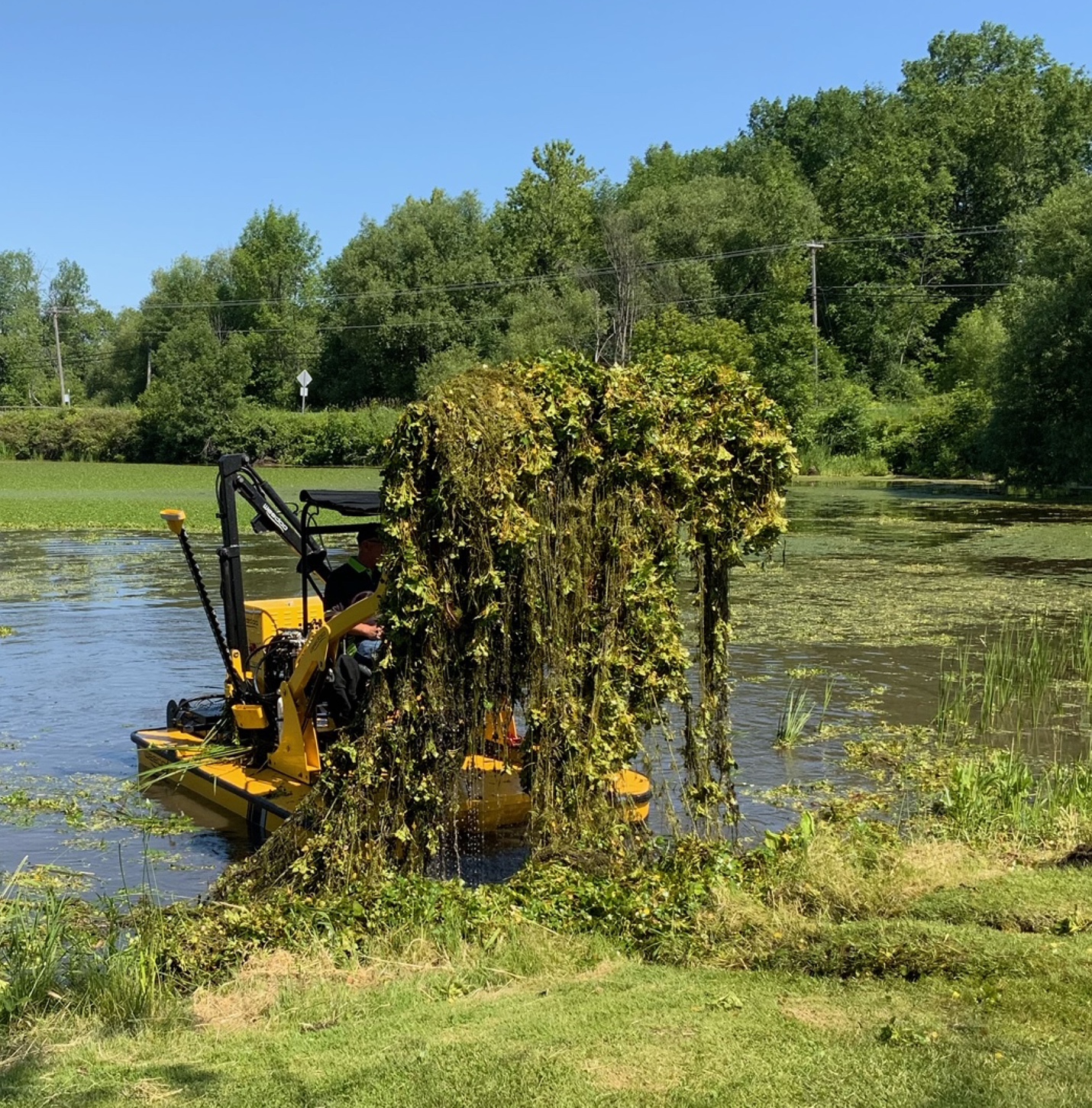
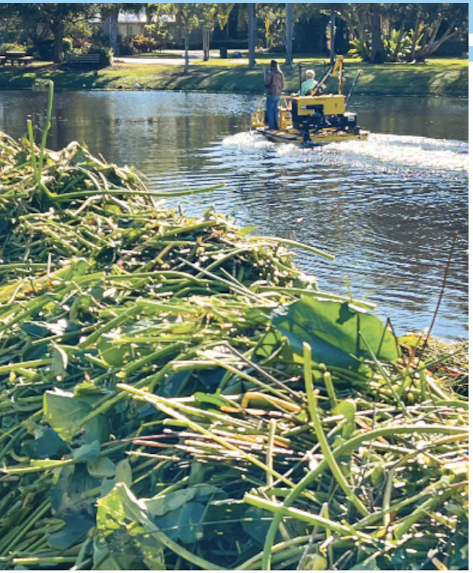
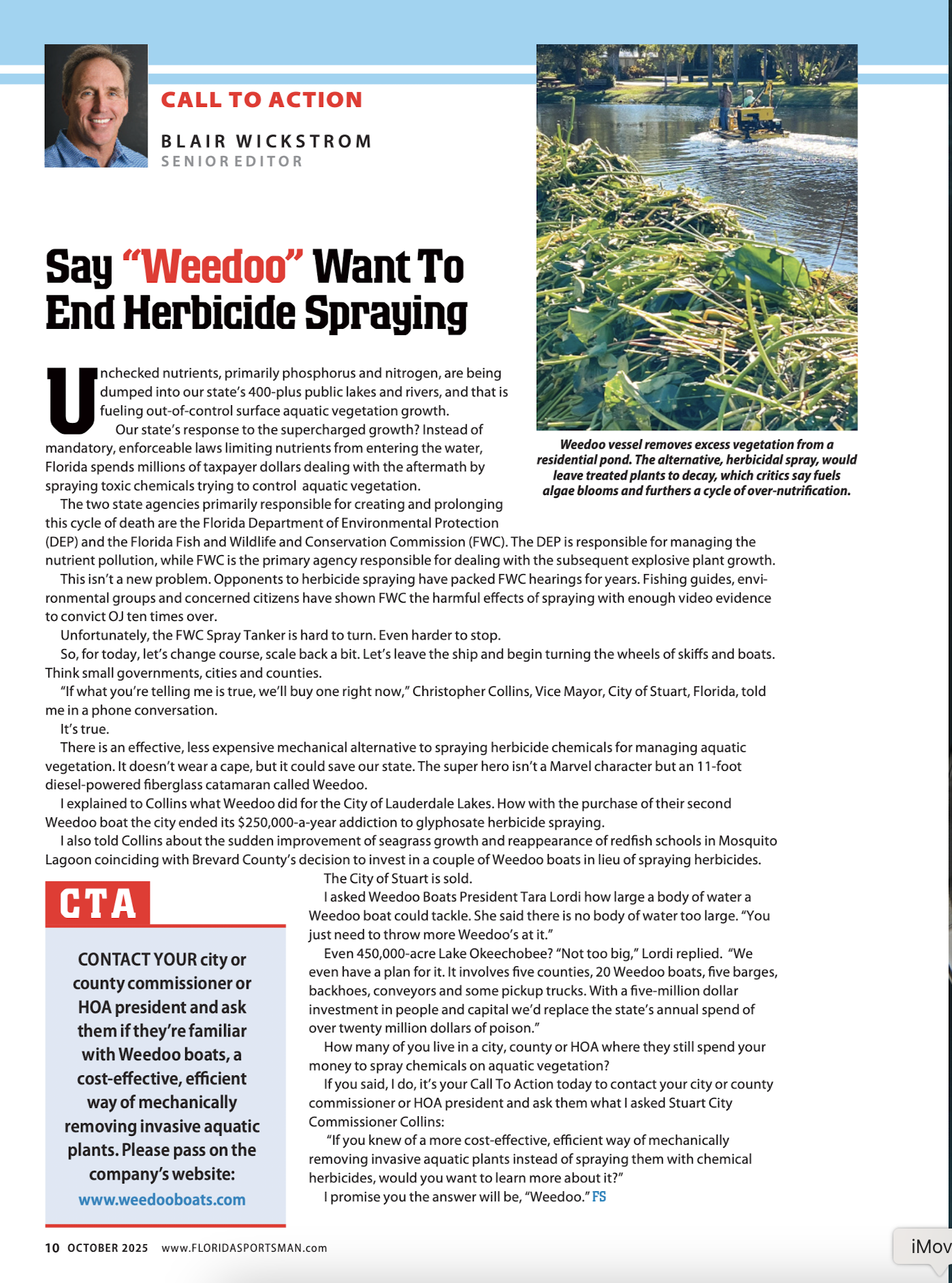
In business for more than 20 years, Weedoo Boats designs and manufactures compact, purpose-built vessels designed to navigate shallow waters such as swamps, wetlands, canals, lakes and even dry land. Weedoo vessels support environmental remediation, shoreline maintenance, and restoration projects by mechanically removing aquatic vegetation, invasive species, algae, and other biomass—all without the use of harmful chemical herbicides.
At noon Feb. 27, Weedoo Boats will celebrate the opening of its 27,000-square-foot facility with a ribbon cutting ceremony at 1340 S.W. Commerce Way, Stuart.
“We’re excited to expand to Martin County, where the community prioritizes innovative, environmentally responsible practices,” says Tara Lordi, owner and president of Weedoo Boats. “This new facility underscores our commitment to building practical, scalable solutions that serve both people and the environment.”
Weedoo Boats was founded more than 20 years ago by Tara Lordi and her late husband, John Grimes, who worked side by side from the beginning to develop environmentally responsible solutions for removing invasive aquatic vegetation. Their hands-on approach and shared commitment to protecting waterways laid the foundation for a purpose-built marine manufacturing company.
What began as an effort to restore a backyard lake quickly evolved into the design and fabrication of specialized, shallow-draft workboats, setting Weedoo on a path of innovation, scalability, and larger impact.
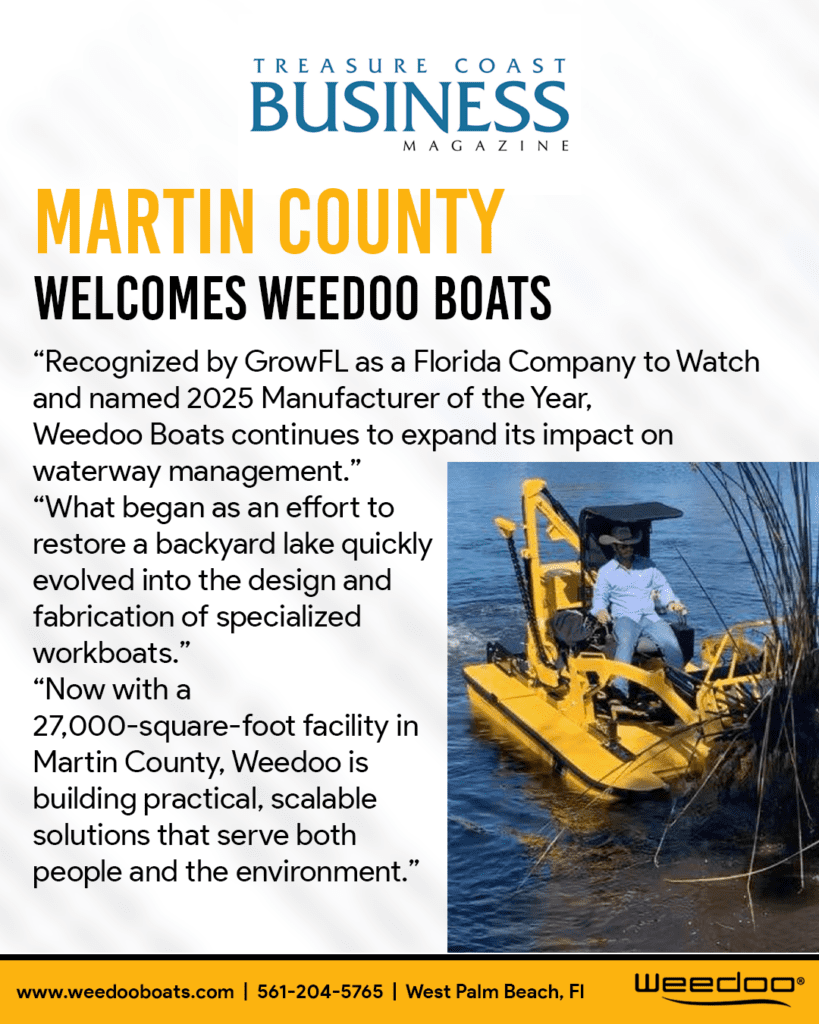
Recognized by GrowFL as a Florida Company to Watch and named 2025 Manufacturer of the Year by the South Florida Manufacturers Association (SFMA), Weedoo partners with municipalities, water management districts, nuclear power plants, and environmental organizations seeking effective alternatives to chemical spraying.
“It’s always exciting to welcome a new business to the community—especially one that broadens our already strong marine industry,” says William Corbin, BDBMC executive director. “But when you look at how Weedoo’s products support environmentally healthy ways to manage invasive vegetation, it’s clear Martin County is the right place for this company to grow.”
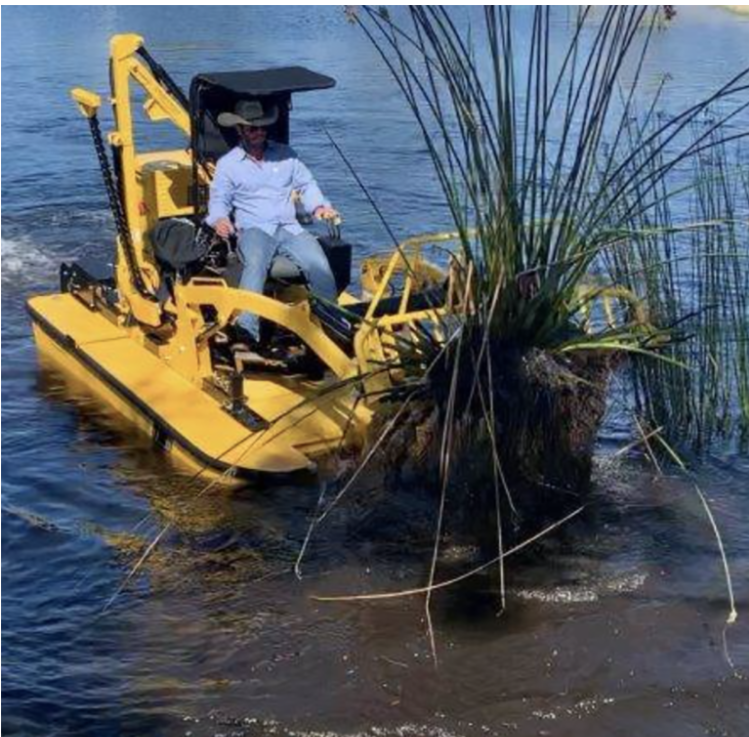
The company’s vessel lineup includes highly maneuverable shallow- draft workboats that can operate in as little as eight inches of water. Equipped with biomass-loading devices, these vessels are capable of collecting up to 500 pounds of vegetation per intake cycle.
Beyond its core workboat platforms, Weedoo also manufactures barges with integrated conveyor systems for transporting and offloading large volumes of harvested vegetation. These systems are engineered for large-scale challenges, including lake-wide infestations, seasonal algae blooms, and high-biomass events such as those affecting Lake Okeechobee and similar waterways.
The ribbon-cutting ceremony will conclude with the raising of the American Flag inside the facility to honor U.S. veterans. Lordi hails from a long line of Army veterans and emphasizes service, discipline and duty as core company values embedded in Weedoo Boat’s leadership philosophy and company culture.

“We find that many government agencies are trending toward ‘green’ initiatives, yes. But at the end of the day, what officials really want is a product that makes their job easier, not harder. They need to provide results to their constituents. The Weedoo is a proven model that not only provides effective and immediate results; it also saves these agencies a lot of money.”
Lordi notes that the phrase “grounds maintenance” for many grounds and property managers includes aquatic cleanup. She adds that a key part of that maintenance includes a growing demand for products that can get rid of nuisance weeds and other vegetation overgrowth without the use (and overuse) of dangerous herbicides.
“Government agencies are under pressure from environmental groups and the citizens they serve to protect their waterways by using more sustainable solutions. Consequently, there’s been an explosion in demand for equipment like the aquatic cleanup boats made by Weedoo. These easy-to-maneuver boats can clear 100 tons of vegetation in a day, without the use of herbicides.” Today, Weedoo craft are safely cleaning waterways in 41 states and 18 countries worldwide.”
Lordi outlines the success of her firm’s products compared to traditional weed-killer chemicals: “One municipality went from spending $250,000 a year on herbicides to clear up its lakes and waterways to zero dollars in three years.”
The Weedoo machine provides a method that effectively cleans lakes and streams without causing significant harm to the water. It is user-friendly and sturdy enough to complete the job. The company’s TC-Series workboat, which has been compared to a skid steer on water, can easily navigate through shallow rivers, streams, ponds and other bodies of water.


Our waterways are anything but clean, and trash and pollutants are an immediate danger to fish and the underwater ecosystem. That’s where Tara Lordi and her company, Weedoo Greenboat, come to the surface.
Growing up in New York at the base of the Catskill Mountains, I spent my childhood outside — climbing trees, exploring streams, and finding joy in nature’s quiet moments. The water was truly our playground. I never questioned that it would always be clean, always be there for us. But one day, that changed.
I remember standing at the edge of a lake, staring at a freshly posted sign that said, “No Swimming for 24 hours.” I started investigating and found out that chemicals were being poured into the water to kill off an invasive weed. Well, fish can’t read! The human swimmers may have been protected from the chemicals, but the fish and other critters in the water were out of luck. It was this early experience, and the influence of my grandfather and father, both of whom were devoted to science and the environment, that set me on a path toward environmental protection.
My career didn’t begin in environmental engineering, but my passion for solving problems led me to it. I worked in industries that required innovation and resourcefulness, skills that I would later apply to my true calling. Eventually, I had the opportunity to co-found a company that would create small but mighty aquatic weed harvesters. I saw their potential—not just as machines, but as tools to restore balance to our waterways without relying on harmful herbicides.
That’s how Weedoo Greenboats was born. We build eco-friendly aquatic harvesters that remove invasive vegetation efficiently and sustainably. We don’t just clean up lakes and rivers — we restore them, making them safe and accessible again. Our boats are now being used in 41 states and 18 countries by government agencies and private businesses alike.
I’m encouraged that a growing number of people are asking hard questions about what is going into the lakes and streams where they live and play. And that the people charged with caring for those bodies of water are recognizing that it makes good environmental and economic sense to use a mechanical approach to weed removal versus a chemical one. It’s an issue that is not going away any time soon. As climate change fosters more opportunities for new and invasive species to thrive in new areas, and as development expands beyond the city limits, the need to have clean, clear waterways will only grow.
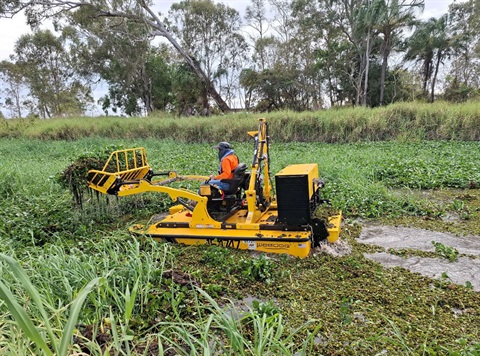

Burdekin Shire Council is pleased to announce the successful launch of its new Weedoo aquatic weed harvester at the recently upgraded ramp at Sheepstation Creek.
A Weedoo machine is a specialised piece of equipment designed for aquatic vegetation management.
The vessel, imported from the United States, is purpose-built for use in aquatic weed environments and provides Council with an innovative tool to improve the health of local waterways.
During its first outing, the Weedoo completed four hours of operation, removing an estimated two tonnes of weed in just the first 30 minutes.
Mayor Pierina Dalle Cort said the launch was a milestone moment in Council’s ongoing environmental efforts.
“This new Weedoo aquatic weed harvester is a game changer for our region,” Mayor Dalle Cort said.
“To see two tonnes of weed removed in just half an hour shows the enormous potential of this technology to protect our waterways and, ultimately, the Great Barrier Reef.
“It’s a smart investment in the future health of our environment and our community. Council will be working alongside local landholders to restore our creeks and wetlands, creating healthier habitats for both people and wildlife.”
“Burdekin Shire Council is proud to be one of only three Councils in Australia operating a Weedoo harvester, made possible through the support of the Reef Guardian Councils Program.”
The acquisition of the Weedoo was supported through funding under the Reef Guardian Councils Program, which partners with local governments to deliver projects that protect the health of the Great Barrier Reef.
The Weedoo harvester is an efficient solution for the removal of aquatic weeds and will be actively used to physically remove declared aquatic weeds, which landholders can then repurpose as mulch, contributing to a more sustainable and efficient management of local waterways.
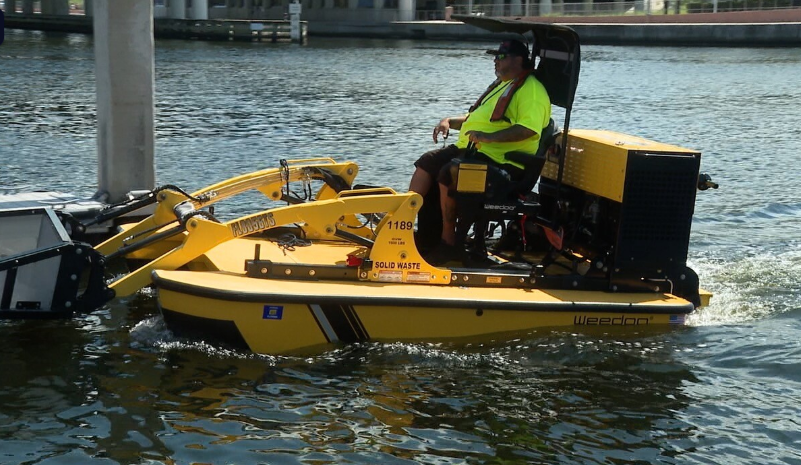
TAMPA, Fla. — If you ask Anthony Sardinas, he’ll tell you he’s got the best job there is“I’m on the water, so I mean it doesn’t get any better,” Sardinas said..(By Mary O’Connell ,Copyright 2025, abcactionnews.com)
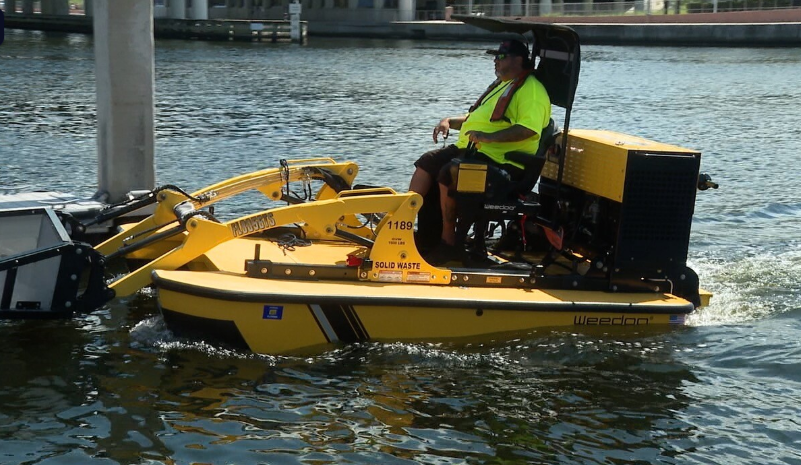
He’s one of the captains of the Litter Skimmer, a trash boat in Tampa helping keep waterways clean.
Sardinas has seen a little bit of everything from plastic bags and bottles to yard debris.
“I did pick up a ten-yard dumpster that was after the hurricane,” he said.
ABC Action News has shown you just how much it’s scooped up over the years.
“That first year with collecting trash on the waterways, we collected 26,000 pounds of trash,” said Larry Washington, the City of Tampa’s Solid Waste Director. “That’s in the first year. Fast forward three years, we’ve more than tripled that amount.”
In fact, Tampa leaders said since its launch, the 43-foot Litter Skimmer has removed more than 94,000 pounds of debris.
The City is now expanding its effort by launching the Little Skimmer, a smaller vessel that can access harder to reach areas like seawalls, mangroves, and shallow edges.
“These two will be incredibly active right now in the storm season,” said Tampa Mayor Jane Castor. “When we’re having these very hard rainfalls, they’re really pulling all of that trash into our city.”
It’s not only an important initiative for beauty but for healthy living.
“The Hillsborough water is literally the source of drinking water for all Tampa residents and a third of Hillsborough County,” Castor said. “It is critically important for the marine life, for the health of the river, but for the health of our community as well.”
You can help make Sardinas’ job easier by doing your part.
“This is the life and soul of the city, believe it or not. Everything leads to the river, so if you drop it out there, it’s going to find its way here, and I’m going to end up having to pick it up for you,” said Sardinas.