Aquatic weed control is not just about managing visible growth. It’s about how vegetation and organic material affect the water over time. In many waterways, the challenge builds gradually as plant matter grows, dies, and accumulates.
Why Aquatic Weeds Become a Problem
Aquatic plants are a natural part of healthy ecosystems. But when growth becomes excessive, it can:
- Limit water flow and access
- Block sunlight needed by native species
- Contribute to lower oxygen levels as plants decay
It’s about how vegetation and organic material affect the water over time.
Considerations with Chemical Treatments
Chemical herbicides are commonly used to manage aquatic weeds, but they come with trade-offs. When vegetation is treated, the plant material typically remains in the water and breaks down. This process can contribute to additional organic buildup over time.
Some treatments may also require temporary restrictions on water use, depending on the product and local regulations. Guidance from agencies like the U.S. Environmental Protection Agency and state authorities is typically followed to ensure safe application.
For many waterway managers, the question is not just how to control growth—but how to manage what remains after treatment.
The Role of Mechanical Removal
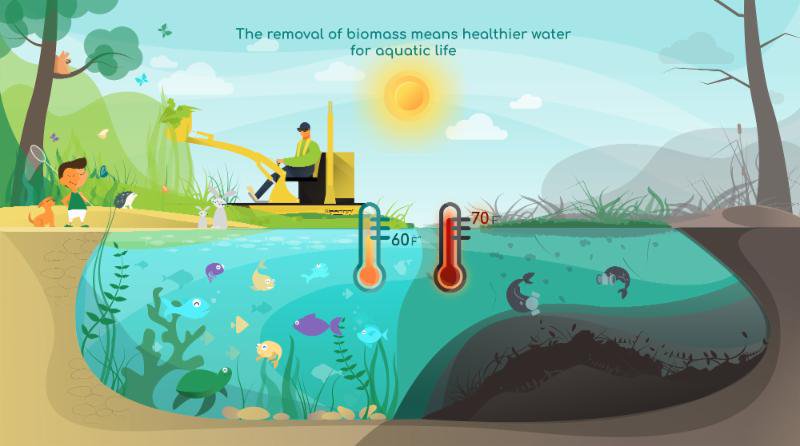
Mechanical harvesting uses environmental workboats to cut and remove vegetation from the water. By physically extracting plant material, this approach reduces the amount left to decompose and contribute to future buildup. It is often used to:
- Restore water flow
- Improve access and usability
- Support more stable water conditions over time
Mechanical removal is frequently part of a broader, long-term aquatic weed control strategy.
Choosing the Right Approach
The best solution depends on:
- Type of vegetation (submerged, floating, emergent)
- Size and depth of the waterway
- Access points and shoreline conditions
- Long-term maintenance goals
In many cases, a combination of methods is used to maintain balance.
Bottom Line
Aquatic weed control is not just about stopping growth. It’s about managing what stays in the water and what gets taken out. Environmental workboats provide a practical way to remove vegetation and debris entirely, helping waterways function better over time.
For organizations looking for a mechanical approach, environmental workboats provide a practical way to manage waterways more directly. Solutions like those from Weedoo Greenboat, Inc. are designed to support consistent, long-term maintenance without relying solely on chemical treatments.