INSPIRE w/Tara Lordi: Grief & Business Growth EP499
The Michael Brian Show

https://vimeo.com/909809922?fl=pl&fe=sh
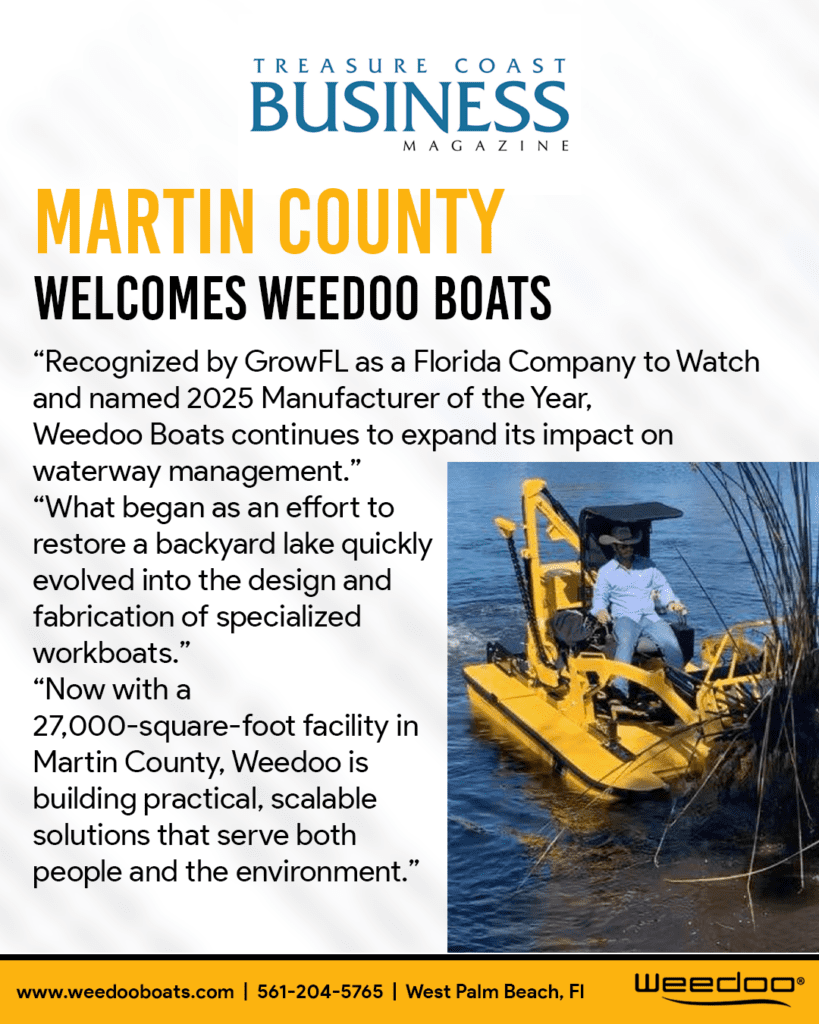
STUART—Martin County is now home to an innovative marine manufacturing company whose creations and products align nicely with the community’s commitment to protecting natural resources, waterways and wildlife habitat.
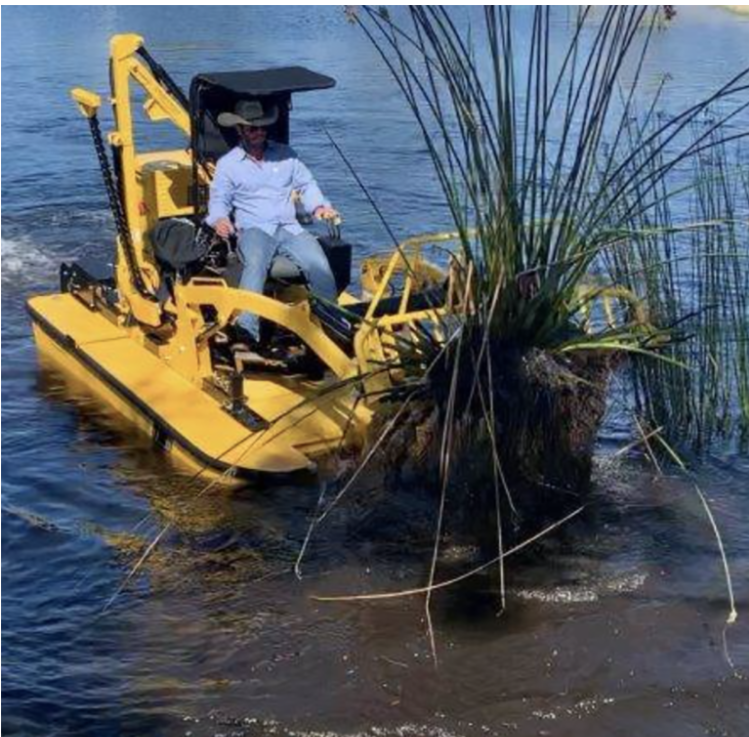
In business for more than 20 years, Weedoo Boats designs and manufactures compact, purpose-built vessels designed to navigate shallow waters such as swamps, wetlands, canals, lakes and even dry land. Weedoo vessels support environmental remediation, shoreline maintenance, and restoration projects by mechanically removing aquatic vegetation, invasive species, algae, and other biomass—all without the use of harmful chemical herbicides.
At noon Feb. 27, Weedoo Boats will celebrate the opening of its 27,000-square-foot facility with a ribbon cutting ceremony at 1340 S.W. Commerce Way, Stuart.
“We’re excited to expand to Martin County, where the community prioritizes innovative, environmentally responsible practices,” says Tara Lordi, owner and president of Weedoo Boats. “This new facility underscores our commitment to building practical, scalable solutions that serve both people and the environment.”
Weedoo Boats was founded more than 20 years ago by Tara Lordi and her late husband, John Grimes, who worked side by side from the beginning to develop environmentally responsible solutions for removing invasive aquatic vegetation. Their hands-on approach and shared commitment to protecting waterways laid the foundation for a purpose-built marine manufacturing company.
What began as an effort to restore a backyard lake quickly evolved into the design and fabrication of specialized, shallow-draft workboats, setting Weedoo on a path of innovation, scalability, and larger impact.
Recognized by GrowFL as a Florida Company to Watch and named 2025 Manufacturer of the Year by the South Florida Manufacturers Association (SFMA), Weedoo partners with municipalities, water management districts, nuclear power plants, and environmental organizations seeking effective alternatives to chemical spraying.
“It’s always exciting to welcome a new business to the community—especially one that broadens our already strong marine industry,” says William Corbin, BDBMC executive director. “But when you look at how Weedoo’s products support environmentally healthy ways to manage invasive vegetation, it’s clear Martin County is the right place for this company to grow.”
The company’s vessel lineup includes highly maneuverable shallow- draft workboats that can operate in as little as eight inches of water. Equipped with biomass-loading devices, these vessels are capable of collecting up to 500 pounds of vegetation per intake cycle.
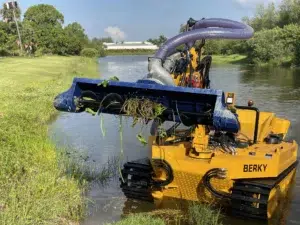
Beyond its core workboat platforms, Weedoo also manufactures barges with integrated conveyor systems for transporting and offloading large volumes of harvested vegetation. These systems are engineered for large-scale challenges, including lake-wide infestations, seasonal algae blooms, and high-biomass events such as those affecting Lake Okeechobee and similar waterways.
The ribbon-cutting ceremony will conclude with the raising of the American Flag inside the facility to honor U.S. veterans. Lordi hails from a long line of Army veterans and emphasizes service, discipline and duty as core company values embedded in Weedoo Boat’s leadership philosophy and company culture.
Preparing for Safe Aquatic Weed Removal in Spring

As waterway managers plan for the season ahead, one question keeps surfacing: how to control aquatic weeds quickly, safely, and sustainably. While chemical herbicides remain common, scientific and government research increasingly points to mechanical harvesting as a faster and more environmentally responsible solution.
Immediate Results Matter
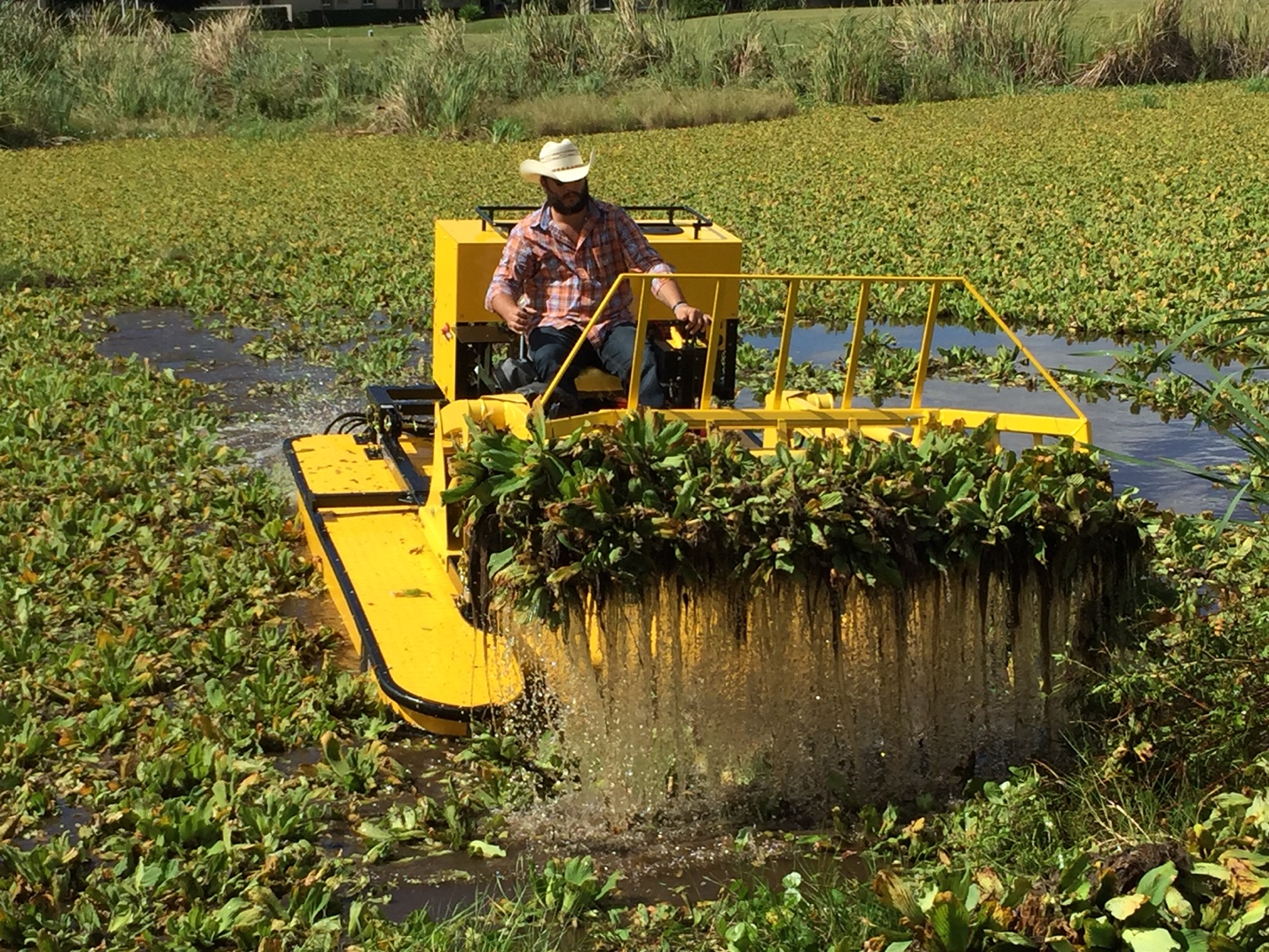
Mechanical harvesting physically cuts and removes aquatic vegetation from the water. According to research from the U.S. Army Corps of Engineers, this approach provides immediate relief in navigation channels, swim areas, and high-use waterways — unlike herbicides, which can take days or weeks to show results and leave vegetation in place while it dies and decomposes.
Removing Weeds — and the Nutrients They Carry
Government and lake management studies show that mechanical harvesting does more than clear space. By removing plant biomass entirely, it also removes nutrients like nitrogen and phosphorus that would otherwise be released back into the water during decomposition. This helps reduce conditions that contribute to algal blooms and declining water quality.
Reliable, Targeted, and Chemical-Free
Unlike chemical treatments, mechanical harvesting does not depend on water chemistry, temperature, or plant uptake. NOAA and state ecology agencies recognize mechanical methods as reliable tools for targeted control, especially in areas where safety, public access, and environmental sensitivity are priorities.
Just as important, mechanical harvesting avoids introducing chemicals into waterways — reducing risk to people, pets, wildlife, and downstream ecosystems, and eliminating post-treatment water-use restrictions often associated with herbicides.
A Smarter Start to the Season
While every waterbody is different, many agencies now favor mechanical harvesting as a primary strategy, using chemicals only when access or conditions require it. Planning ahead in January allows managers to prioritize solutions that deliver immediate results, predictable performance, and long-term water quality benefits.