Posted on

Clearing waterways of nuisance vegetation can be a green achievement

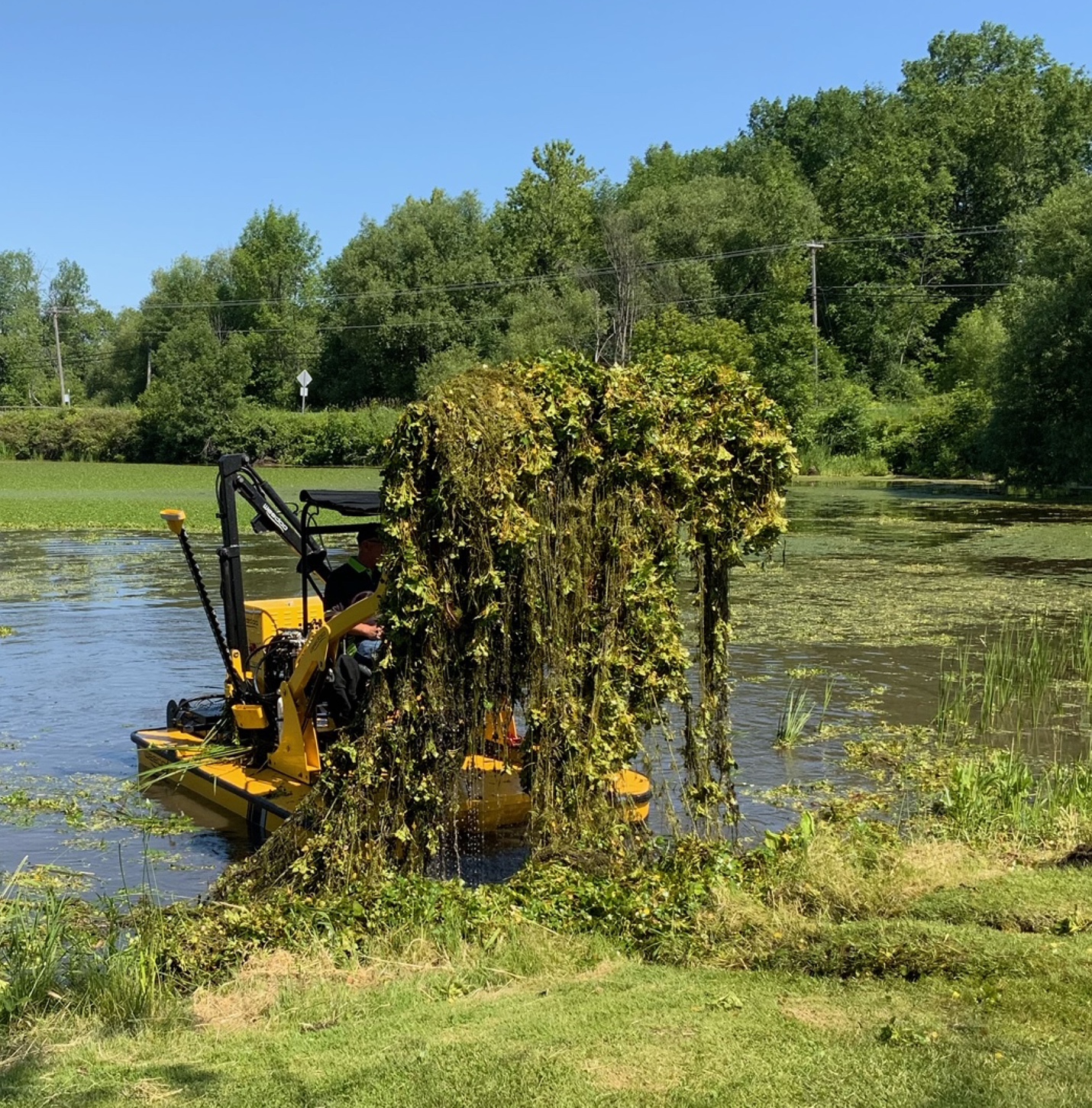
Yellow excavator removing large pond weeds

Clearing waterways of nuisance vegetation can be a green achievement

“We find that many government agencies are trending toward ‘green’ initiatives, yes. But at the end of the day, what officials really want is a product that makes their job easier, not harder. They need to provide results to their constituents. The Weedoo is a proven model that not only provides effective and immediate results; it also saves these agencies a lot of money.”

Lordi notes that the phrase “grounds maintenance” for many grounds and property managers includes aquatic cleanup. She adds that a key part of that maintenance includes a growing demand for products that can get rid of nuisance weeds and other vegetation overgrowth without the use (and overuse) of dangerous herbicides.

“Government agencies are under pressure from environmental groups and the citizens they serve to protect their waterways by using more sustainable solutions. Consequently, there’s been an explosion in demand for equipment like the aquatic cleanup boats made by Weedoo. These easy-to-maneuver boats can clear 100 tons of vegetation in a day, without the use of herbicides.” Today, Weedoo craft are safely cleaning waterways in 41 states and 18 countries worldwide.”

Lordi outlines the success of her firm’s products compared to traditional weed-killer chemicals: “One municipality went from spending $250,000 a year on herbicides to clear up its lakes and waterways to zero dollars in three years.”   

The Weedoo machine provides a method that effectively cleans lakes and streams without causing significant harm to the water. It is user-friendly and sturdy enough to complete the job. The company’s TC-Series workboat, which has been compared to a skid steer on water, can easily navigate through shallow rivers, streams, ponds and other bodies of water.

Posted on

A Cleaner Path for Waterways in 2025

Yellow aquatic vegetation harvester at pond

Mechanical vs. Chemical: The 2025 Trend in Waterway Management.


Across the country, water managers are rethinking how they handle invasive weeds, algae, and debris. Mechanical removal is becoming a preferred option over chemical treatments. Herbicides may provide quick visual results, but they only affect what’s above the surface. The roots remain, regrowth is rapid, and the decaying vegetation often fuels new algae blooms — creating a cycle of repeated treatments, ongoing disruption, and no lasting improvement.

Mechanical removal takes a different approach by physically extracting the problem. Instead of killing vegetation and leaving it to break down, mechanical tools remove weeds, roots, and debris completely — preventing nutrient buildup and protecting water quality. The result is cleaner water with no waiting periods and no chemical risk.

Why Chemical Treatments Fall Short

  • Treat the tops of plants but leave root systems behind
  • Cause rapid regrowth and repeated application cycles
  • Leave behind decaying vegetation that feeds algae
  • Often require water-use restrictions afterward

Why Mechanical Removal Is Gaining Ground

  • Removes vegetation entirely — roots, mats, and debris
  • Keeps oxygen levels stable and aquatic life safer
  • Works immediately with no chemicals or waiting periods
  • Produces cleaner, longer-lasting results

As more communities question how their waterways are being maintained, the demand for eco-friendly solutions continues to grow. Compact mechanical equipment is increasingly important — particularly in tight, shallow, or hard-to-reach areas where large harvesters can’t operate.

Weedoo is built for exactly this need. Compact, powerful, and engineered for precision, Weedoo workboats deliver pure muscle, zero chemicals, and real restoration — making mechanical removal the clear choice for 2025 and beyond.