Posted on

An Eco-Friendly Fix for a Growing Coastal Threat

Yellow seaweed cleanup machine near palm-lined beach

An Eco-Friendly Fix for a Growing Coastal Threat


Communities around the world—especially those near coastlines—are facing a growing sargassum problem. What starts as an offshore bloom can lead to serious environmental, health, and economic consequences. Sargassum is a floating seaweed that washes ashore in massive quantities. While it may look harmless out at sea, once it piles up on beaches, it quickly begins to rot, smell, attract pests, and disrupt tourism, wildlife, and water quality.

What’s Fueling the Surge?

Scientists link the explosion of sargassum blooms to rising ocean temperatures, changes in currents, and nutrient runoff from agriculture and deforestation.

Why It Matters

Sargassum isn’t just a nuisance. It can:
• Suffocate coral reefs and marine life
• Release hydrogen sulfide gas, which smells awful and can irritate breathing
• And of course—scare off tourists with piles of smelly seaweed

A Smarter, Cleaner Solution

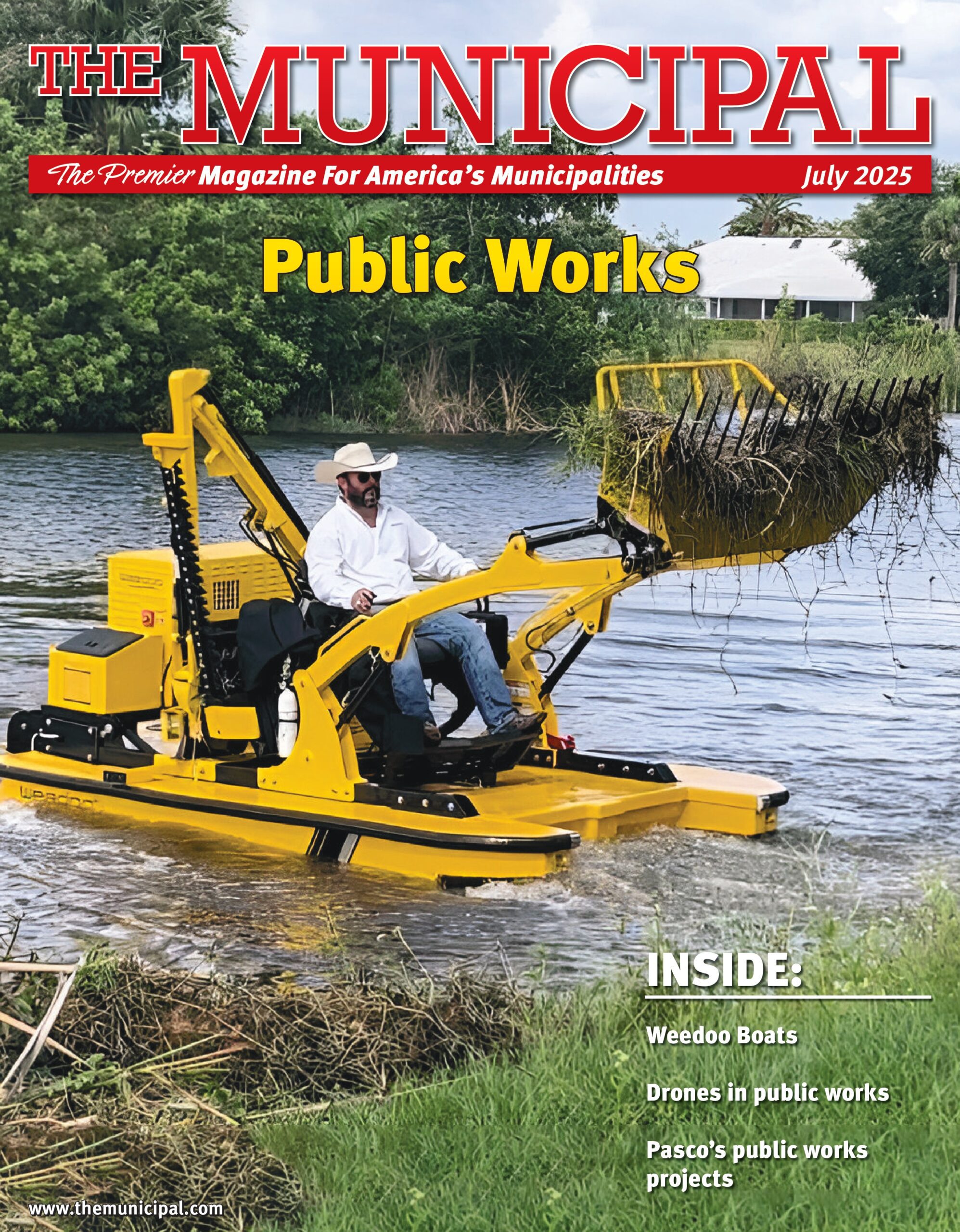
Enter Weedoo Workboats. Instead of waiting until sargassum lands and starts decomposing, Weedoo provides a mechanical, chemical-free way to remove it before it becomes a problem. Weedoo’s shallow-draft boats and quick-change attachment systems allow operators to skim, collect, and transport sargassum from nearshore waters efficiently and with minimal impact to the environment.

No bulldozers. No rakes. No shoreline damage. Just fast, smart, eco-friendly cleanup.

Trusted by Resorts, Cities, and Contractors

Weedoo boats are helping keep waterways and shorelines clear. Municipalities and private contractors rely on Weedoo not just for sargassum, but for duckweed, trash, algae, cattails, and other aquatic nuisances. With a flexible system built to adapt to changing conditions, Weedoo delivers real results—without relying on harmful chemicals or labor-heavy methods.

Clean It Up—The Right Way

If sargassum is threatening your beach, marina, or canal, don’t wait until it piles up. Get ahead of the problem with a Weedoo Workboat built for the job.
Cleaner water. Healthier ecosystems. Happier visitors.

Ready to take action? Contact us at 561-204-5765 to learn how Weedoo can help you tackle sargassum—quickly, cleanly, and sustainably.
Posted on

City of Tampa’s new ‘Little Skimmer’ trash boat helps keep waterways clean

Yellow water cleanup skimmer boat with operator

City of Tampa’s new ‘Little Skimmer’ trash boat helps keep waterways clean

TAMPA, Fla. — If you ask Anthony Sardinas, he’ll tell you he’s got the best job there is“I’m on the water, so I mean it doesn’t get any better,” Sardinas said..(By Mary O’Connell ,Copyright 2025, abcactionnews.com)

By Mary O’Connell

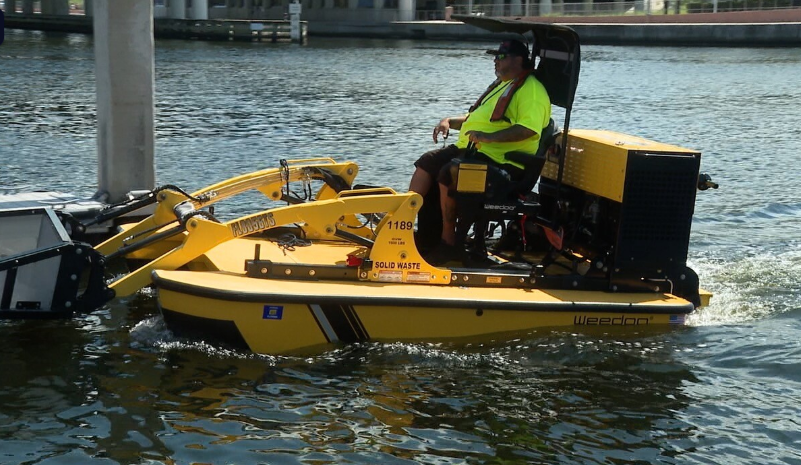
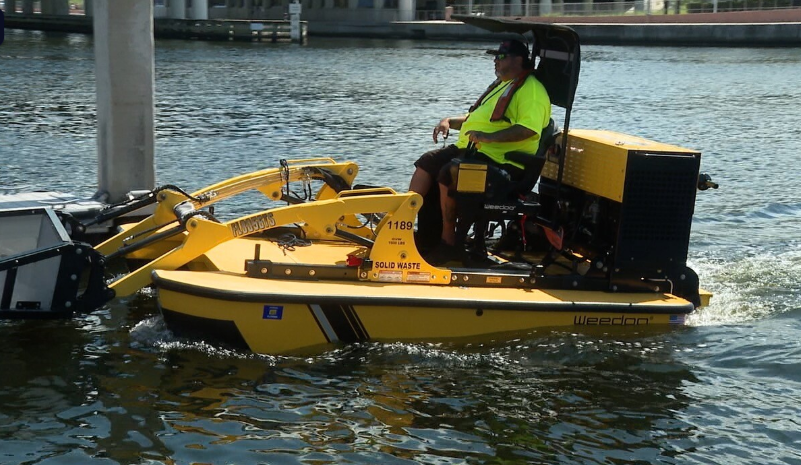
He’s one of the captains of the Litter Skimmer, a trash boat in Tampa helping keep waterways clean.

Sardinas has seen a little bit of everything from plastic bags and bottles to yard debris.

“I did pick up a ten-yard dumpster that was after the hurricane,” he said.

ABC Action News has shown you just how much it’s scooped up over the years.

“That first year with collecting trash on the waterways, we collected 26,000 pounds of trash,” said Larry Washington, the City of Tampa’s Solid Waste Director. “That’s in the first year. Fast forward three years, we’ve more than tripled that amount.”

In fact, Tampa leaders said since its launch, the 43-foot Litter Skimmer has removed more than 94,000 pounds of debris.

The City is now expanding its effort by launching the Little Skimmer, a smaller vessel that can access harder to reach areas like seawalls, mangroves, and shallow edges.

“These two will be incredibly active right now in the storm season,” said Tampa Mayor Jane Castor. “When we’re having these very hard rainfalls, they’re really pulling all of that trash into our city.”

It’s not only an important initiative for beauty but for healthy living.

“The Hillsborough water is literally the source of drinking water for all Tampa residents and a third of Hillsborough County,” Castor said. “It is critically important for the marine life, for the health of the river, but for the health of our community as well.”

You can help make Sardinas’ job easier by doing your part.

“This is the life and soul of the city, believe it or not. Everything leads to the river, so if you drop it out there, it’s going to find its way here, and I’m going to end up having to pick it up for you,” said Sardinas.

Posted on

Weedoo clearing the way: Why more municipalities are turning to mechanical harvesting for waterway health

Yellow aquatic weed harvester removing shoreline vegetation

Weedoo clearing the way: Why more municipalities are turning to mechanical harvesting for waterway health

Weedoo is leading the way in sustainable solutions for public works. Our workboats help municipalities restore and protect waterways—no chemicals, no compromise.(By The Municipal ,Copyright 2025, themunicipal.com)

By The Municipal

Public works departments are under growing pressure to meet environmental regulations, manage costs and maintain community trust. Nowhere is that balancing act more visible than in aquatic maintenance.

From stormwater canals to retention ponds, municipalities face persistent challenges: invasive weeds, organic buildup and nutrient overload. These problems threaten water quality, property values and public health. For decades, the go-to solution was spraying herbicides like glyphosate — but that approach is losing ground.

More public works teams are choosing mechanical harvesting — trading chemicals for cleaner, sustainable tools that physically remove weeds, muck and debris. The results speak for themselves.

The growing trend that’s changing waterways

Freshwater systems with little flow are especially prone to overgrowth. Fertilizer runoff, leaking septic systems and urban development all fuel excess plant growth. When those plants die, they sink and decay, creating layers of muck that smother ecosystems.

Spraying herbicides like glyphosate may seem like a quick fix, but it doesn’t eliminate biomass or nutrients. Often, it worsens the cycle — leading to more growth, more chemicals, and more public concern.

Mechanical harvesting breaks the cycle. It removes vegetation, algae, and muck at the source — lowering nutrient loads, restoring flow and reducing the need for repeat treatments. It’s a proactive solution that benefits both waterways and municipal budgets.

Results that speak for themselves

Faced with rising costs and polluted canals, many municipalities are turning to mechanical removal.

The City of Lauderdale Lakes cut its $250K herbicide budget by 50% within a year of operating their Weedoo Workboat. By year three — now armed with two Weedoos — the city had eliminated spraying altogether and saved $650K with an investment under $200K in mechanical harvesting.

In Brevard County, officials launched an in-house harvesting program with a Weedoo. In just two years, they removed more than 17 million pounds of aquatic debris — compared to just 2.2 million in previous years. Glyphosate use dropped to nearly zero.

The power behind cleaner waterways

Mechanical harvesting isn’t new, but the technology has come a long way. Weedoo’s compact, rugged workboats — proudly made in the USA — are purpose-built to tackle invasive plants, sediment and floating debris.

Quick-change attachments let a single operator mow, skim, dredge or pump — reducing labor needs and maximizing productivity.

Smarter tools, greater impact:

• Initial Investment vs. Long-Term Savings

• Easy to Operate and Train

• Safe Near Schools, Parks & Homes

 Build Public Trust Through Visible Action

The future is mechanical

As regulations tighten and expectations rise, cities need real solutions. Mechanical harvesting isn’t just a shift in strategy — it’s a shift in mindset.

By removing the root of the problem, municipalities can restore water quality, reduce costs and protect public health. The future of aquatic maintenance is here — and it’s mechanical.