Treating invasive weeds with chemical herbicides can provide short-term control, but it typically does not remove the underlying problem. In many cases, vegetation remains in the water, breaks down, and contributes to ongoing water quality challenges.
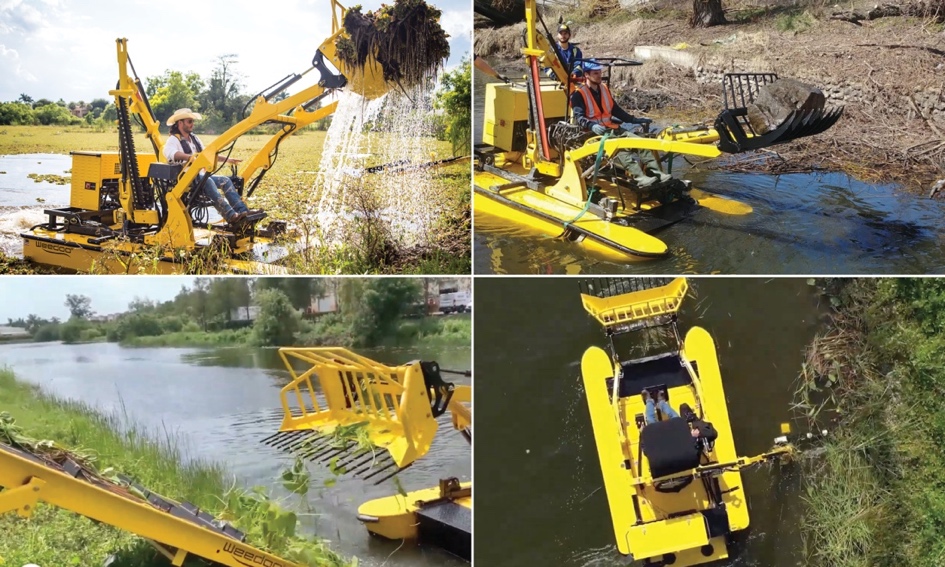
Specialized environmental workboats take a different approach. They are designed to support mechanical removal, helping restore flow, access, and overall waterway function.
What Makes an Environmental Workboat Different
Unlike general-purpose vessels, environmental workboats are built for specific tasks like vegetation removal, debris recovery, and shoreline maintenance.
This requires a combination of:
- Shallow-water capability
- Stable platforms for attachments
- Hydraulic systems designed for continuous work
The goal is not just to operate in the water, but to actively improve it.
Why Mechanical Removal Matters
Waterway managers are increasingly focused on approaches that support long-term conditions.According to the U.S. Environmental Protection Agency, excess nutrients and decaying plant material can contribute to reduced oxygen levels and declining water quality.
Mechanical harvesting helps address this by removing vegetation from the system, reducing the amount left to decompose.
Design Considerations That Impact Performance
Effective workboats are built with real-world conditions in mind.
Shallow Draft
Allows access to tight or sensitive areas where larger vessels cannot operate.
Stability
Supports safe use of attachments for lifting, cutting, and clearing.
Durability
Materials and construction must withstand debris, vegetation, and repeated use.
Versatility on the Water
Many environmental workboats are designed to support interchangeable attachments.
This allows a single platform to:
- Cut and remove vegetation
- Collect floating debris
- Perform multiple maintenance tasks
Versatility reduces the need for multiple machines and improves efficiency in the field.
Choosing the Right Manufacturer
Not all workboats are built for environmental use.
When evaluating options, it helps to consider:
- Experience with aquatic remediation
- Availability of parts and service
- Compatibility with attachments and accessories
A specialized manufacturer focuses on long-term usability, not just initial performance.
Bottom Line
Waterway remediation requires more than general equipment. It calls for tools designed specifically for the conditions and challenges found on the water.
Environmental workboats support a direct, mechanical approach—helping remove vegetation, improve access, and maintain waterways over time.