

Posted on Leave a comment

Every Waterway Is Part of a Community.

Summer Weeds Are Here. Before You Spray, Consider What Happens Next.


As temperatures rise, so does aquatic vegetation. Hydrilla, water hyacinth, duckweed, algae, torpedo grass, and other invasive plants grow rapidly during the summer months, covering ponds, lakes, canals, and stormwater systems. Left unmanaged, they can block water flow, interfere with recreation, clog infrastructure, and reduce oxygen levels needed by fish and other aquatic life.

For many organizations, the first response is herbicide treatment. While chemical spraying can provide a temporary visual improvement, it doesn’t remove the vegetation from the water. Instead, the plants die where they are and begin to decompose. What happens after that deserves just as much consideration as the treatment itself.

What Happens After Spraying?

When large amounts of aquatic vegetation die at once, the decaying plant material consumes dissolved oxygen as it breaks down. In some cases, oxygen levels can drop enough to stress or even kill fish and other aquatic organisms.

Dead vegetation can also:

  • Continue blocking water flow until it decomposes.
  • Release nutrients back into the water as it breaks down, potentially contributing to future weed and algae growth.
  • Create unpleasant odors.
  • Leave waterways and shorelines covered with decaying plant matter.

Another important consideration is how many communities use their ponds and lakes.

Many HOAs, municipalities, golf courses, and commercial properties use retention ponds and lakes as irrigation sources. When those waterways have been treated with herbicides, that same water may later be used to irrigate lawns, landscaping, parks, athletic fields, and other common areas. While herbicides are applied according to labeled directions and regulations, understanding how treated water is used throughout a property is an important part of developing a long-term aquatic management strategy.

Herbicides have an important role in many aquatic management programs, and in some cases are used alongside mechanical removal. Understanding what happens after application is just as important as considering the initial treatment.

Mechanical Removal Changes the Equation
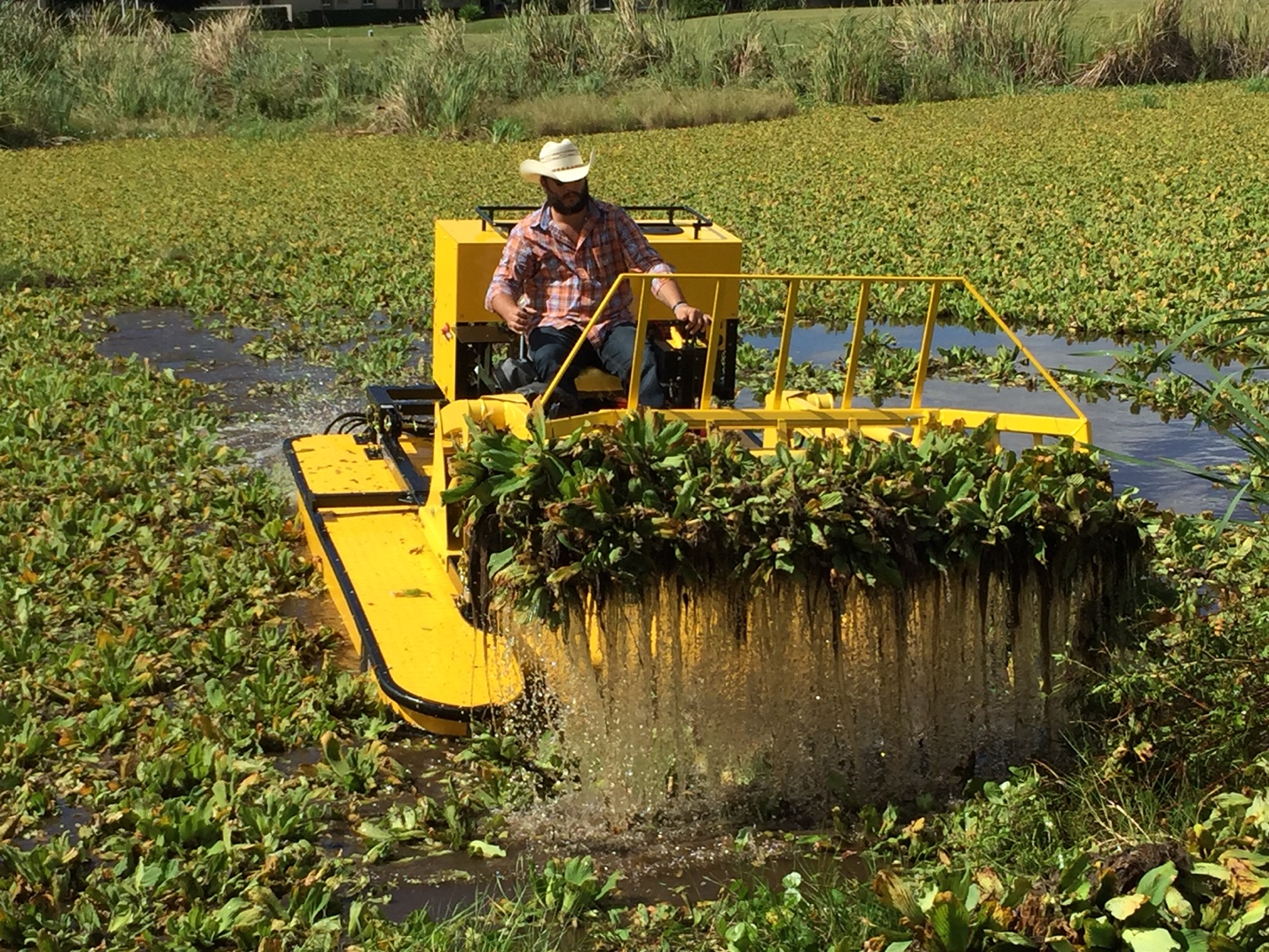
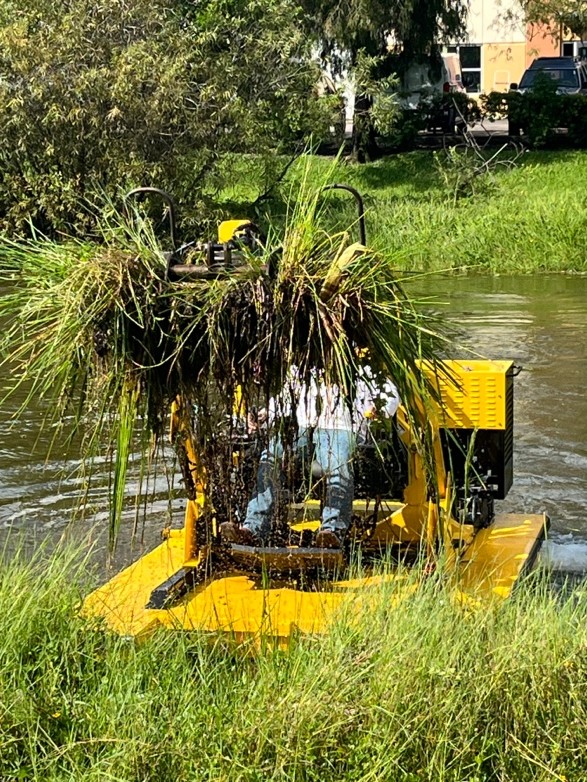
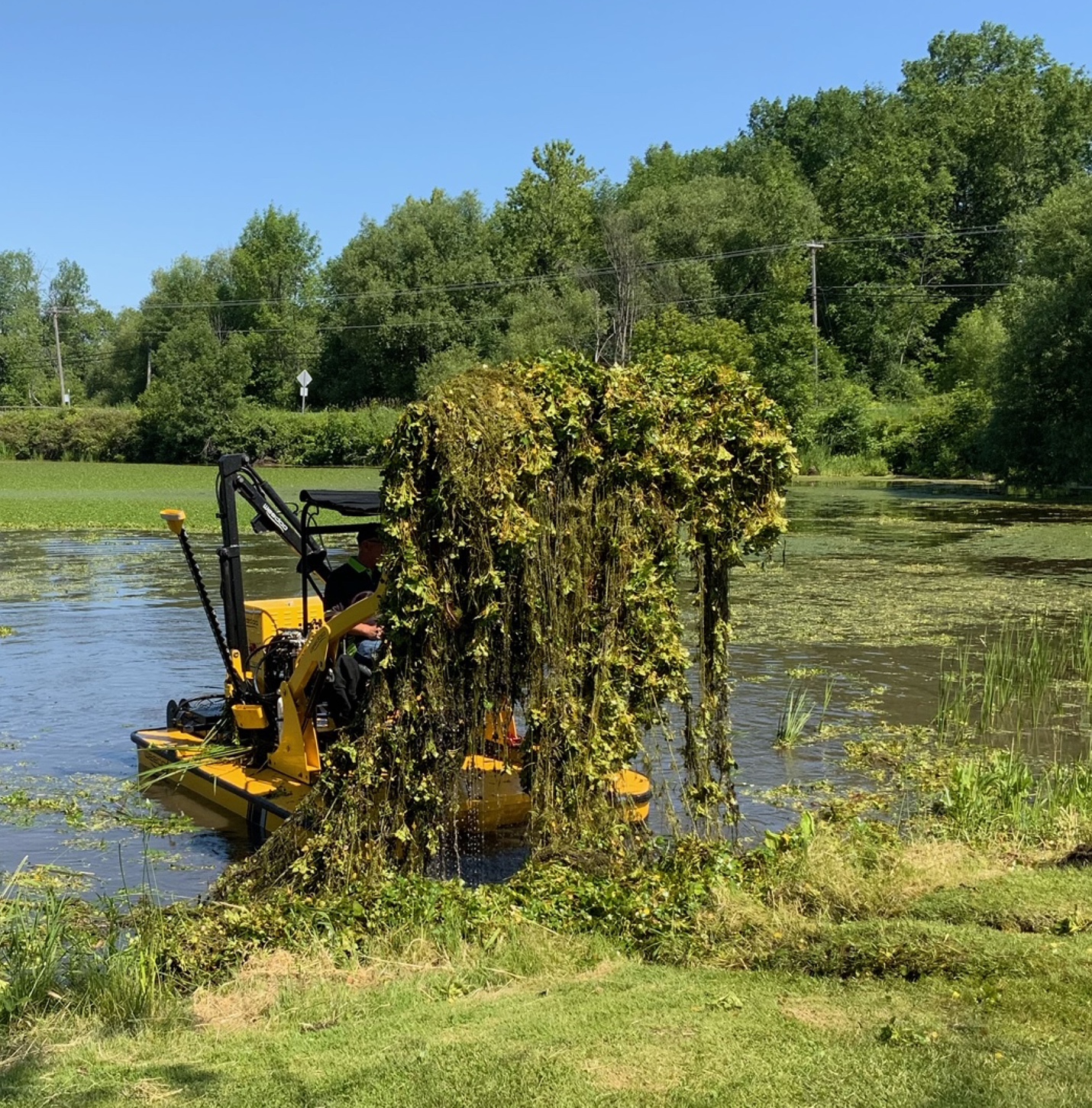
Mechanical harvesting physically removes aquatic vegetation from the water.Instead of leaving large amounts of biomass behind to decompose, aquatic weeds are collected and transported to shore for disposal or composting. Removing vegetation also removes the nutrients stored within the plants, helping reduce the amount of nutrient-rich biomass remaining in the water.

Mechanical removal offers several additional benefits:

  • Immediate improvement in water access and navigation.
  • No large masses of decaying vegetation left in the water.
  • Reduced organic biomass remaining in the water after treatment.
  • Less disruption to recreational use.
  • A practical solution for waterways near neighborhoods, parks, golf courses, marinas, industrial facilities, and other frequently used public spaces.

Mechanical harvesting is an important tool in many comprehensive aquatic management programs used by municipalities, aquatic management contractors, HOAs, golf courses, industrial facilities, and waterfront property managers.

Summer Is the Time to Act
Aquatic weeds grow quickly during the hottest months of the year. Addressing infestations early often makes maintenance easier and helps prevent waterways from becoming heavily overgrown.

Every waterway is different, and the right management strategy depends on the type of vegetation, water conditions, environmental goals, and long-term maintenance plan. Before reaching for the sprayer, it’s worth asking one simple question:

What happens after the weeds die?
At Weedoo, we believe physically removing invasive vegetation is one of the most effective ways to help maintain cleaner, healthier, and more usable waterways. By collecting and removing plant material instead of leaving it to decompose in place, mechanical harvesting can play an important role in long-term aquatic management.

Posted on

Residents notice overgrown waterways. They should also know how they’re being maintained.

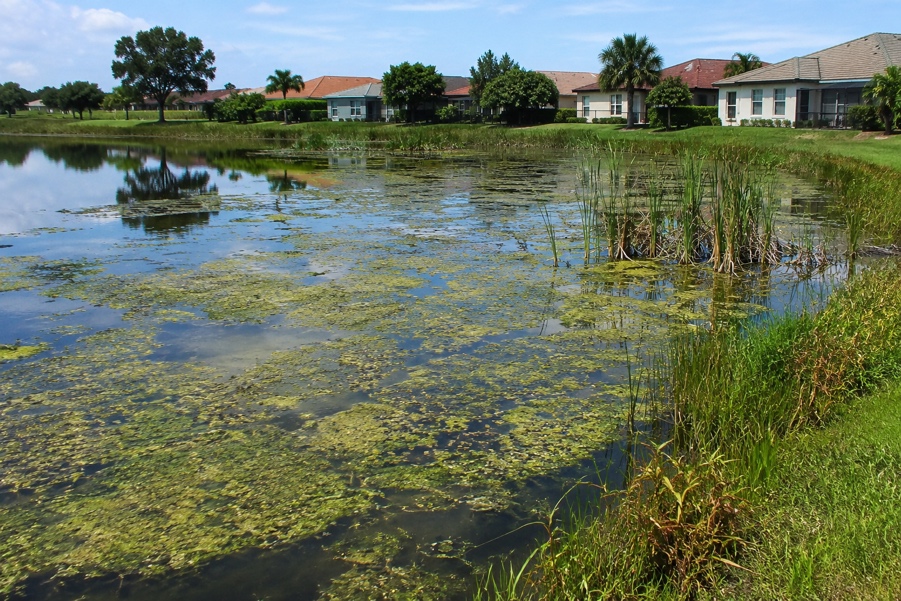
Suburban houses by pond with algae and reeds

Ask Your HOA How They’re Cleaning the Waterways


For HOAs and property managers, waterways are part of the community’s appearance and quality of life. When ponds, canals, retention areas, and shorelines become overgrown, residents notice quickly.

Aquatic weeds, algae, shoreline overgrowth, floating debris, and clogged water flow can create ongoing maintenance problems, especially during warmer months when vegetation spreads rapidly. In many communities, chemical spraying becomes the standard response. But more residents are beginning to ask questions about repeated herbicide use around neighborhoods, pets, wildlife, walking paths, playgrounds, and recreational water areas.

Residents should know how their HOA is maintaining community waterways and ask whether repeated chemical treatments are being used.

Many chemical applications kill vegetation in place, leaving dead plant material to decay in the water while requiring ongoing treatments throughout the season.

That’s one reason more HOAs are exploring mechanical waterway cleanup instead.

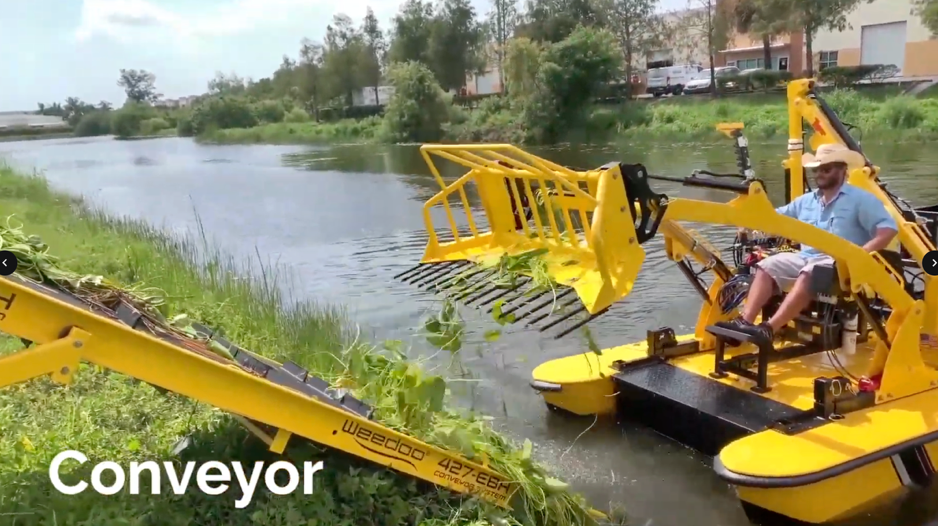
Weedoo Workboats physically cut, collect, and remove invasive vegetation, floating debris, and shoreline buildup without relying on herbicides. Instead of chemically treating weeds and waiting for them to die off, the vegetation is physically removed from the waterway. The result is immediate, visible improvement with cleaner shorelines, improved water flow, and better-looking common areas residents can actually see.

Mechanical harvesting also helps communities avoid many of the concerns residents often associate with repeated chemical applications near homes and shared outdoor spaces.

Weedoo equipment is built for real HOA conditions, including retention ponds, decorative lakes, canals, golf course waterways, and tight shoreline access areas. Quick-change attachment systems allow operators to handle multiple maintenance tasks with one machine, from aquatic weed removal to debris cleanup and shoreline maintenance.

For HOAs focused on appearance, environmental responsibility, and resident concerns, mechanical cleanup offers a practical alternative to chemical-dependent maintenance programs. No chemicals. Just removal.

Posted on

Aquatic Workboats: Making the Right Investment

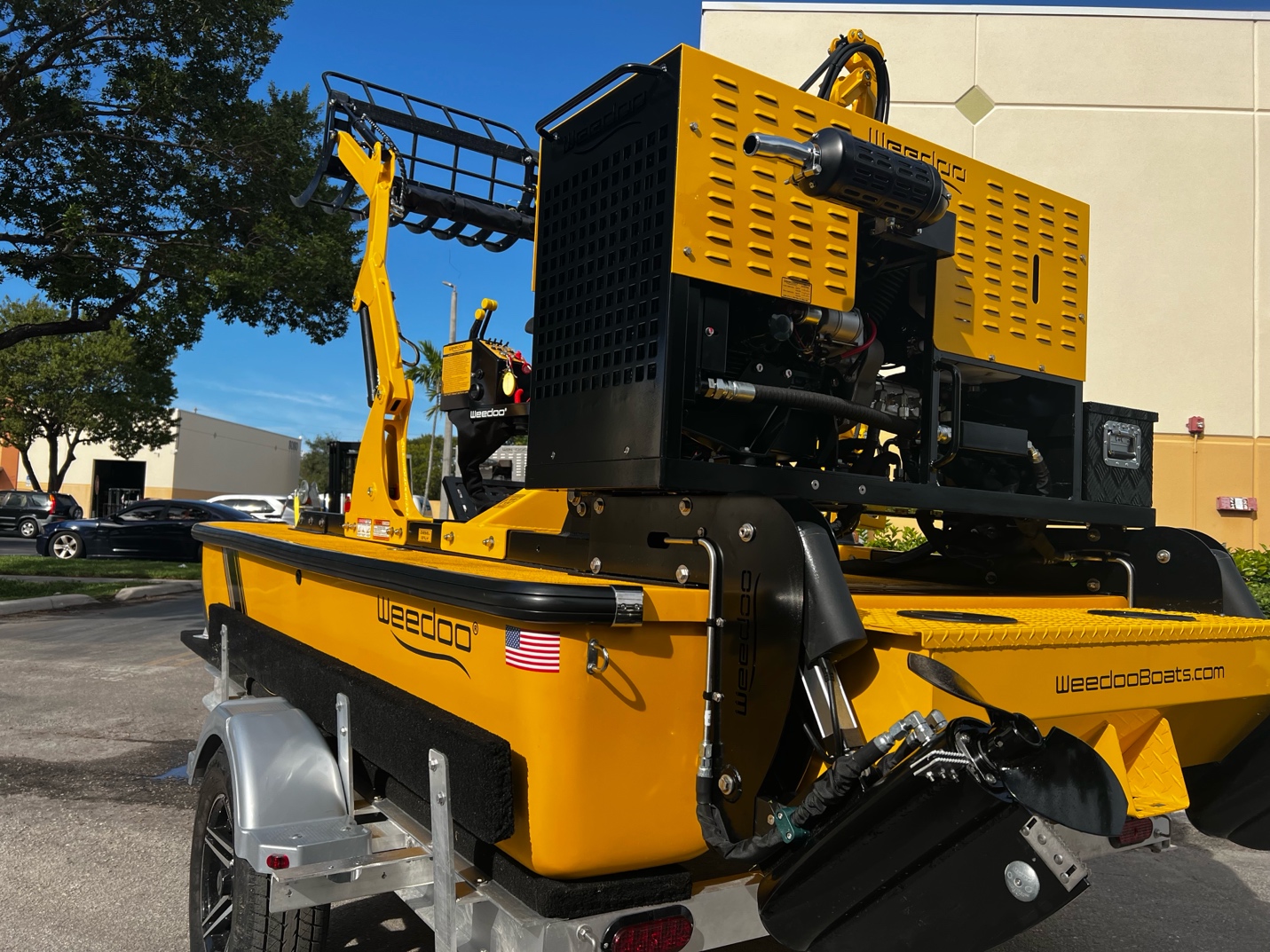
Yellow Weedoo weed-harvesting boat on trailer

Exploring Practical Buying Options for Waterway Maintenance


Restoring a large waterway does not always require a brand-new machine. In many cases, a well-maintained, field-proven vessel can deliver the same results at a more accessible cost.

For organizations working within tight budgets, a used aquatic workboat can provide a practical path to reliable performance without the higher upfront investment of new equipment.

Here are a few key things to look for when evaluating a used vessel and what to inspect before purchasing.

Why Mechanical Removal Is Gaining Attention

Waterway managers are increasingly focused on solutions that improve both function and environmental health.

According to the U.S. Environmental Protection Agency, excess nutrients and decaying plant matter can reduce oxygen levels and impact water quality. Chemical treatments may control growth temporarily, but they do not remove biomass from the system.

Mechanical harvesting addresses this differently. By physically removing vegetation, it reduces the amount of organic material left to decompose, helping improve flow and overall conditions.

Why Consider a Used Workboat

Used environmental workboats can offer strong value when properly maintained. Built for demanding, repetitive use in shallow and debris-heavy environments, many remain capable of reliable performance for years.

What to Inspect Before Buying

A thorough inspection is essential. Focus on:

Hydraulic System
Hydraulics power most attachments used for cutting, lifting, and clearing vegetation. Look for leaks, worn hoses, or signs of pressure loss.

Hull and Structural Integrity
Check for cracks, stress points, or visible repairs. The hull is critical for stability, especially in shallow or uneven waterways.

Engine and Maintenance Records
Review service logs whenever possible. Consistent maintenance is often a better indicator of reliability than engine hours alone.

Mechanical Removal vs. Chemical Treatment

There is no one-size-fits-all solution for aquatic management. However, mechanical removal is often chosen when the goal is immediate clearing and full removal of vegetation.

Unlike chemical treatments, which typically require repeat applications, harvesting removes plant material from the waterway entirely. This can help reduce regrowth associated with decomposition.

Final Takeaway

A used aquatic workboat can be a smart investment when approached carefully. With proper inspection and realistic expectations, it can deliver dependable performance and support long-term waterway maintenance goals.

If the goal is to improve water flow and remove vegetation, mechanical harvesting provides a direct, physical approach to getting results.

Posted on

The Role of Environmental Workboats in Waterway Restoration

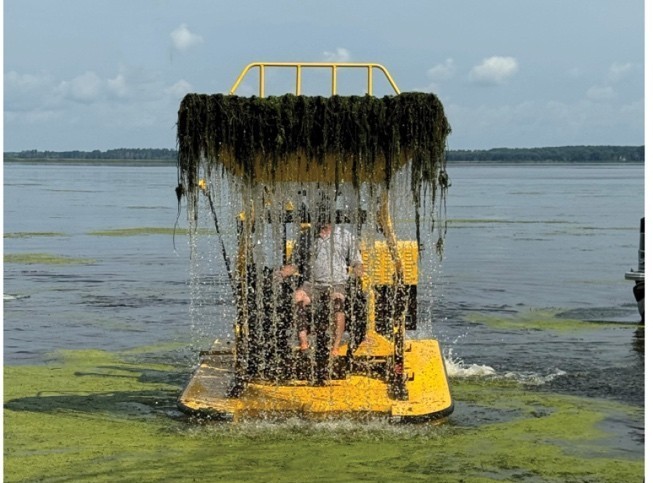
Yellow paddleboat covered in hanging algae

How Environmental Workboats Support Waterway Remediation


Treating invasive weeds with chemical herbicides can provide short-term control, but it typically does not remove the underlying problem. In many cases, vegetation remains in the water, breaks down, and contributes to ongoing water quality challenges.

Specialized environmental workboats take a different approach. They are designed to support mechanical removal, helping restore flow, access, and overall waterway function.

What Makes an Environmental Workboat Different

Unlike general-purpose vessels, environmental workboats are built for specific tasks like vegetation removal, debris recovery, and shoreline maintenance.

This requires a combination of:

  • Shallow-water capability
  • Stable platforms for attachments
  • Hydraulic systems designed for continuous work

The goal is not just to operate in the water, but to actively improve it.

Why Mechanical Removal Matters

Waterway managers are increasingly focused on approaches that support long-term conditions.According to the U.S. Environmental Protection Agency, excess nutrients and decaying plant material can contribute to reduced oxygen levels and declining water quality.

Mechanical harvesting helps address this by removing vegetation from the system, reducing the amount left to decompose.

Design Considerations That Impact Performance

Effective workboats are built with real-world conditions in mind.

Shallow Draft
Allows access to tight or sensitive areas where larger vessels cannot operate.

Stability
Supports safe use of attachments for lifting, cutting, and clearing.

Durability
Materials and construction must withstand debris, vegetation, and repeated use.

Versatility on the Water

Many environmental workboats are designed to support interchangeable attachments.

This allows a single platform to:

  • Cut and remove vegetation
  • Collect floating debris
  • Perform multiple maintenance tasks

Versatility reduces the need for multiple machines and improves efficiency in the field.

Choosing the Right Manufacturer

Not all workboats are built for environmental use.

When evaluating options, it helps to consider:

  • Experience with aquatic remediation
  • Availability of parts and service
  • Compatibility with attachments and accessories

A specialized manufacturer focuses on long-term usability, not just initial performance.

Bottom Line

Waterway remediation requires more than general equipment. It calls for tools designed specifically for the conditions and challenges found on the water.

Environmental workboats support a direct, mechanical approach—helping remove vegetation, improve access, and maintain waterways over time.

Posted on

Managing Aquatic Vegetation: Removal vs. Treatment

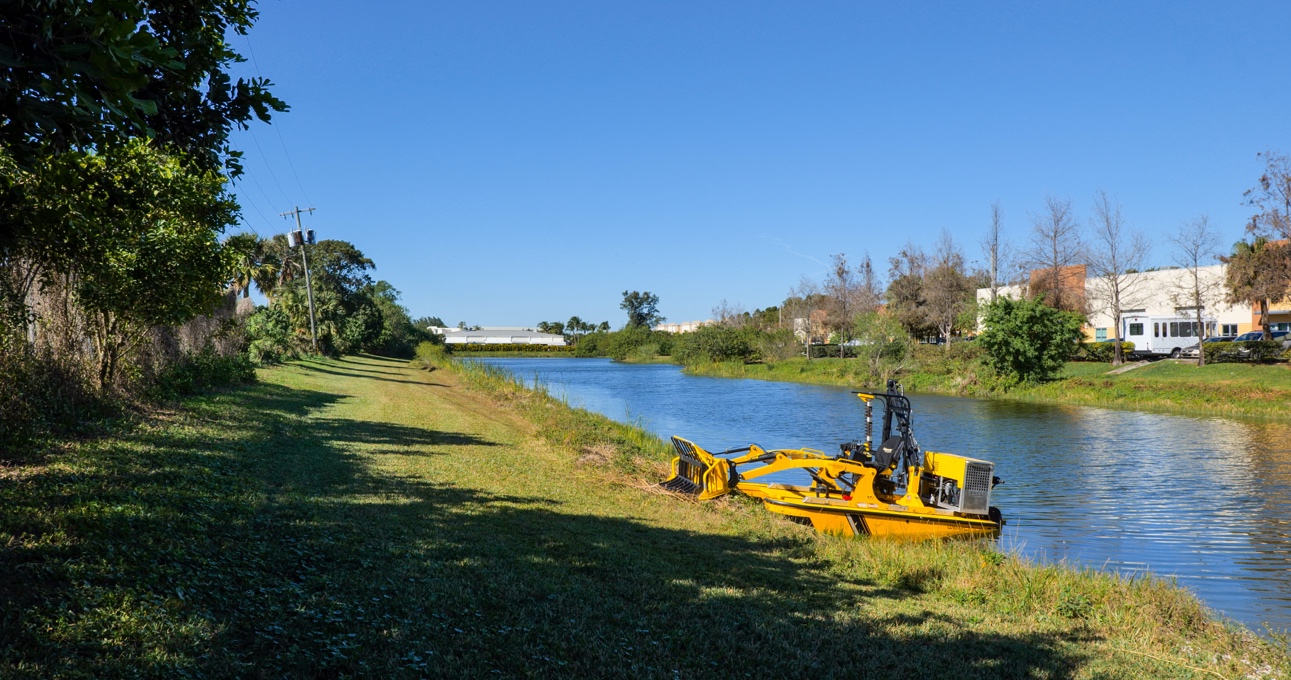
Yellow aquatic weed cutter on canal bank

Aquatic Weed Control: Mechanical Removal vs. Chemical Treatment


Aquatic weed control is not just about managing visible growth. It’s about how vegetation and organic material affect the water over time. In many waterways, the challenge builds gradually as plant matter grows, dies, and accumulates.

Why Aquatic Weeds Become a Problem

Aquatic plants are a natural part of healthy ecosystems. But when growth becomes excessive, it can:

  • Limit water flow and access
  • Block sunlight needed by native species
  • Contribute to lower oxygen levels as plants decay

It’s about how vegetation and organic material affect the water over time.

Considerations with Chemical Treatments

Chemical herbicides are commonly used to manage aquatic weeds, but they come with trade-offs. When vegetation is treated, the plant material typically remains in the water and breaks down. This process can contribute to additional organic buildup over time.

Some treatments may also require temporary restrictions on water use, depending on the product and local regulations. Guidance from agencies like the U.S. Environmental Protection Agency and state authorities is typically followed to ensure safe application.

For many waterway managers, the question is not just how to control growth—but how to manage what remains after treatment.

The Role of Mechanical Removal

Mechanical harvesting uses environmental workboats to cut and remove vegetation from the water. By physically extracting plant material, this approach reduces the amount left to decompose and contribute to future buildup. It is often used to:

  • Restore water flow
  • Improve access and usability
  • Support more stable water conditions over time

Mechanical removal is frequently part of a broader, long-term aquatic weed control strategy.

Choosing the Right Approach

The best solution depends on:

  • Type of vegetation (submerged, floating, emergent)
  • Size and depth of the waterway
  • Access points and shoreline conditions
  • Long-term maintenance goals

In many cases, a combination of methods is used to maintain balance.

Bottom Line

Aquatic weed control is not just about stopping growth. It’s about managing what stays in the water and what gets taken out. Environmental workboats provide a practical way to remove vegetation and debris entirely, helping waterways function better over time.

For organizations looking for a mechanical approach, environmental workboats provide a practical way to manage waterways more directly. Solutions like those from Weedoo Greenboat, Inc. are designed to support consistent, long-term maintenance without relying solely on chemical treatments.

Posted on

Spring into Action

Man operating yellow aquatic weed harvester

Preparing for Safe Aquatic Weed Removal in Spring


As waterway managers plan for the season ahead, one question keeps surfacing: how to control aquatic weeds quickly, safely, and sustainably. While chemical herbicides remain common, scientific and government research increasingly points to mechanical harvesting as a faster and more environmentally responsible solution.

Immediate Results Matter
Mechanical harvesting physically cuts and removes aquatic vegetation from the water. According to research from the U.S. Army Corps of Engineers, this approach provides immediate relief in navigation channels, swim areas, and high-use waterways — unlike herbicides, which can take days or weeks to show results and leave vegetation in place while it dies and decomposes.

Removing Weeds — and the Nutrients They Carry
Government and lake management studies show that mechanical harvesting does more than clear space. By removing plant biomass entirely, it also removes nutrients like nitrogen and phosphorus that would otherwise be released back into the water during decomposition. This helps reduce conditions that contribute to algal blooms and declining water quality.

Reliable, Targeted, and Chemical-Free
Unlike chemical treatments, mechanical harvesting does not depend on water chemistry, temperature, or plant uptake. NOAA and state ecology agencies recognize mechanical methods as reliable tools for targeted control, especially in areas where safety, public access, and environmental sensitivity are priorities.
Just as important, mechanical harvesting avoids introducing chemicals into waterways — reducing risk to people, pets, wildlife, and downstream ecosystems, and eliminating post-treatment water-use restrictions often associated with herbicides.

A Smarter Start to the Season
While every waterbody is different, many agencies now favor mechanical harvesting as a primary strategy, using chemicals only when access or conditions require it. Planning ahead in January allows managers to prioritize solutions that deliver immediate results, predictable performance, and long-term water quality benefits.

Posted on

From Waterway Nuisance to Useful Resource

Yellow aquatic weed harvester on canal

Many communities put harvested vegetation to practical use


Aquatic weeds can quickly overwhelm canals, lakes, and shorelines. Dense growth can block navigation, slow water flow, and contribute to declining water quality. That’s why many municipalities and water managers rely on mechanical harvesting to remove excess vegetation and restore healthy waterways.

But once those weeds are removed, they don’t have to become waste.

Aquatic plants absorb nutrients like nitrogen and phosphorus from the water as they grow. When dense vegetation dies and decomposes in place, those nutrients are released back into the water and can contribute to future weed or algae growth. By removing the plants entirely, mechanical harvesting helps break that cycle and improve water conditions.

In many communities, the harvested vegetation is put to practical use. Aquatic plants can be composted, used as mulch, or incorporated into soil as organic material. These uses help return nutrients to land rather than leaving them in the water, where they can continue to fuel excessive plant growth.

Mechanical harvesting also allows this material to be collected and conveyed efficiently to shore, making it easier for maintenance crews to remove large volumes of vegetation and transport it for reuse or disposal.

Aquatic weeds may start as a nuisance in the water—but once removed, they can become a useful resource on land.

Posted on

Immediate control, predictable outcomes, and healthier water—without herbicides

Yellow pond harvester removing aquatic weeds

Healthy Waterways in 2026: The Efficiency Edge of Mechanical Harvesting


As waterway managers plan for the season ahead, one question keeps surfacing: how to control aquatic weeds quickly, safely, and sustainably. While chemical herbicides remain common, scientific and government research increasingly points to mechanical harvesting as a faster and more environmentally responsible solution.

Immediate Results Matter
Mechanical harvesting physically cuts and removes aquatic vegetation from the water. According to research from the U.S. Army Corps of Engineers, this approach provides immediate relief in navigation channels, swim areas, and high-use waterways — unlike herbicides, which can take days or weeks to show results and leave vegetation in place while it dies and decomposes.

Removing Weeds — and the Nutrients They Carry
Government and lake management studies show that mechanical harvesting does more than clear space. By removing plant biomass entirely, it also removes nutrients like nitrogen and phosphorus that would otherwise be released back into the water during decomposition. This helps reduce conditions that contribute to algal blooms and declining water quality.

Reliable, Targeted, and Chemical-Free
Unlike chemical treatments, mechanical harvesting does not depend on water chemistry, temperature, or plant uptake. NOAA and state ecology agencies recognize mechanical methods as reliable tools for targeted control, especially in areas where safety, public access, and environmental sensitivity are priorities.
Just as important, mechanical harvesting avoids introducing chemicals into waterways — reducing risk to people, pets, wildlife, and downstream ecosystems, and eliminating post-treatment water-use restrictions often associated with herbicides.

A Smarter Start to the Season
While every waterbody is different, many agencies now favor mechanical harvesting as a primary strategy, using chemicals only when access or conditions require it. Planning ahead in January allows managers to prioritize solutions that deliver immediate results, predictable performance, and long-term water quality benefits.

Posted on

A Cleaner Path for Waterways in 2025

Yellow aquatic vegetation harvester at pond

Mechanical vs. Chemical: The 2025 Trend in Waterway Management.


Across the country, water managers are rethinking how they handle invasive weeds, algae, and debris. Mechanical removal is becoming a preferred option over chemical treatments. Herbicides may provide quick visual results, but they only affect what’s above the surface. The roots remain, regrowth is rapid, and the decaying vegetation often fuels new algae blooms — creating a cycle of repeated treatments, ongoing disruption, and no lasting improvement.

Mechanical removal takes a different approach by physically extracting the problem. Instead of killing vegetation and leaving it to break down, mechanical tools remove weeds, roots, and debris completely — preventing nutrient buildup and protecting water quality. The result is cleaner water with no waiting periods and no chemical risk.

Why Chemical Treatments Fall Short

  • Treat the tops of plants but leave root systems behind
  • Cause rapid regrowth and repeated application cycles
  • Leave behind decaying vegetation that feeds algae
  • Often require water-use restrictions afterward

Why Mechanical Removal Is Gaining Ground

  • Removes vegetation entirely — roots, mats, and debris
  • Keeps oxygen levels stable and aquatic life safer
  • Works immediately with no chemicals or waiting periods
  • Produces cleaner, longer-lasting results

As more communities question how their waterways are being maintained, the demand for eco-friendly solutions continues to grow. Compact mechanical equipment is increasingly important — particularly in tight, shallow, or hard-to-reach areas where large harvesters can’t operate.

Weedoo is built for exactly this need. Compact, powerful, and engineered for precision, Weedoo workboats deliver pure muscle, zero chemicals, and real restoration — making mechanical removal the clear choice for 2025 and beyond.

Posted on

It’s Time to Stop Spraying Your Lake

Yellow excavator removing large pond weeds

Clear the Weeds. Keep the Water Safe.


  1. What Herbicides Really Do

    Aquatic herbicides are chemicals designed to kill plants. They don’t stop working when they hit the water — they dissolve, drift, and linger. Once sprayed, they can:
  • Stay in the water for weeks or months.
  • Break down into byproducts that may still harm living things.
  • Bind to sediments and re-release later when conditions change.
  1. Why That Matters for People and Wildlife

    Spraying isn’t just about killing weeds. It can trigger a chain reaction that affects the entire ecosystem — and sometimes human health:
  • Toxic residues: Traces of glyphosate, diquat, or 2,4-D have been linked to endocrine disruption and other health risks when exposure is frequent.
  • Algae blooms: When plants die all at once, the nutrient surge can fuel harmful algal blooms that release toxins dangerous to people, pets, fish, and wildlife.
  • Oxygen crashes: Massive die-offs can deplete dissolved oxygen, suffocating fish and aquatic life.
  • Bioaccumulation: Some herbicide residues build up in plants and animals, working their way up the food chain.
  1. Safer Alternatives Exist

    Stopping herbicide use doesn’t mean giving up control. Mechanical removal systems like Weedoo Workboats physically remove the problem without chemical fallout. That means:
  • No toxic residues left behind
  • No surprise algae blooms or fish kills
  • No risk to pets, kids, or drinking water
  1. What the Science Says

    EPA and state agencies warn that repeated herbicide applications degrade water quality and threaten public health. If your lake is used for swimming, fishing, irrigation, or as a water source, chemical buildup is a real concern — and often invisible until damage is done.

Bottom Line: Herbicides are a short-term fix with long-term risks. If the goal is a healthy, usable lake — for people, pets, and wildlife — Weedoo mechanical solutions are a safer, more sustainable choice.