Herbicide treatment can make unwanted aquatic vegetation disappear from view. But it does not physically remove that vegetation from the water.
The plants are treated where they are growing. As they die, the remaining plant material begins to decompose unless it is collected and removed.
Treatment Is Not Removal
Dead and dying vegetation may settle to the bottom, adding organic material and sediment to the waterway. University of Florida IFAS identifies the accumulation of decomposing plant material as a water-quality concern.
Decomposition also uses dissolved oxygen. The U.S. Environmental Protection Agency explains that bacteria and fungi consume oxygen as they break down dead plants. The potential impact depends on the amount of vegetation, water temperature, circulation and other conditions within the waterbody.
The risk increases when dense vegetation is treated during warm weather, when water naturally holds less oxygen. Oklahoma State University Extension recommends treating only a portion of a pond at one time to reduce the risk of oxygen depletion as vegetation decomposes.
Mechanical Removal Changes What Happens Next
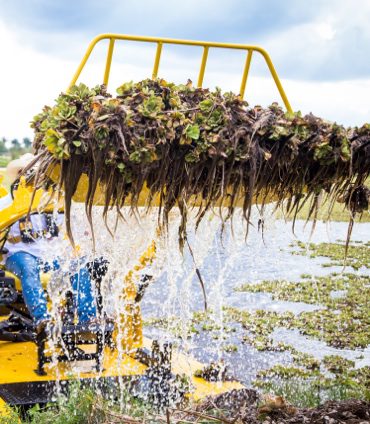
Mechanical removal cuts, collects and transports unwanted vegetation out of the water.That means less plant material is left behind to decompose, settle and add to the waterway’s accumulated biomass. It also provides an immediate, visible result: the vegetation is not simply treated, it is removed.
When evaluating aquatic vegetation management, the question should not be limited to whether the plants disappear. The more important question is: What happens to them next?
Weedoo Takes It Out
Weedoo workboats mechanically cut, collect and remove unwanted aquatic vegetation and accumulated biomass from lakes, ponds, canals and waterways.
No herbicides. Just removal.