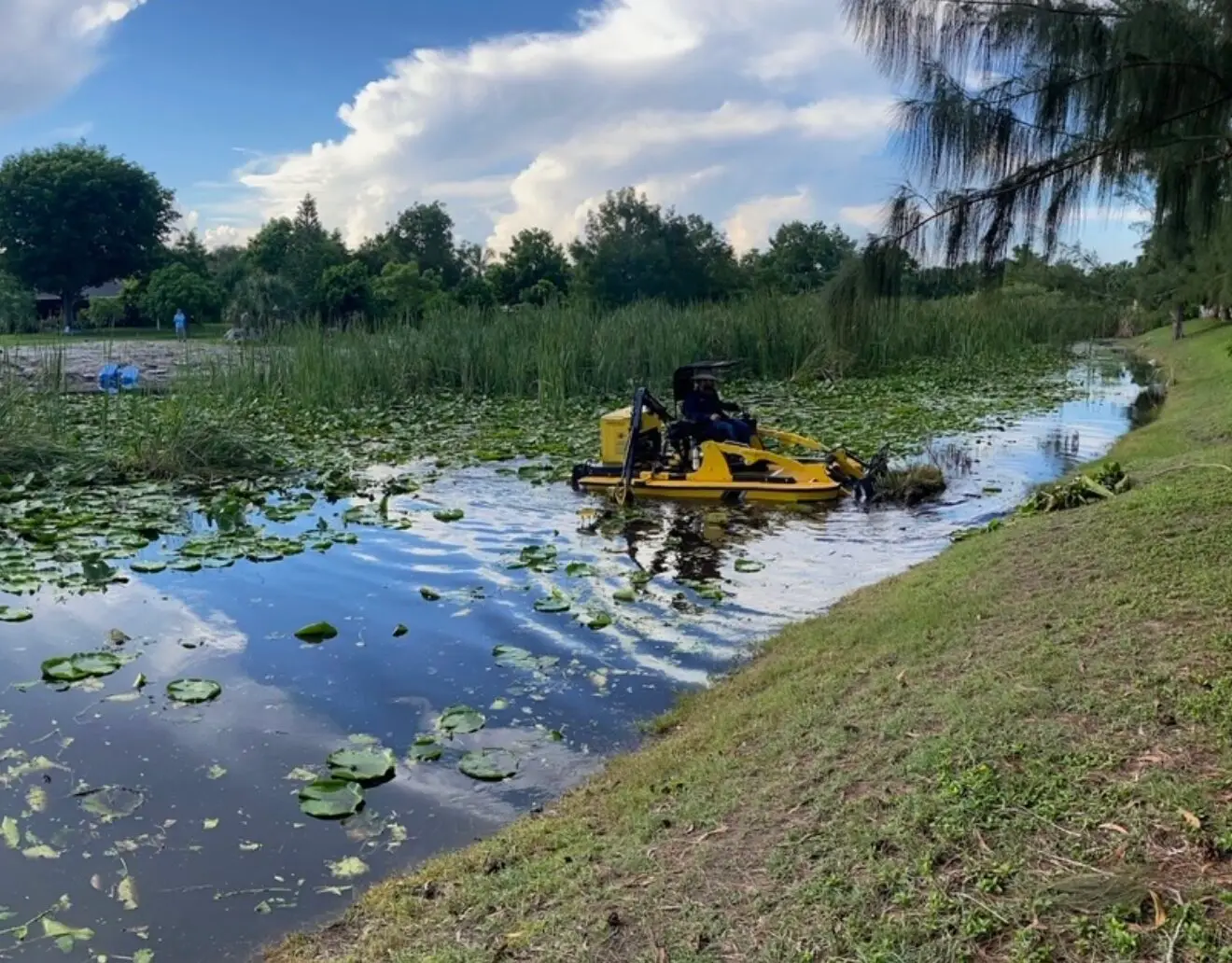
A late-summer walk can show you where weeds are spreading, where debris tends to collect and what deserves a closer look.
You can look at the same pond every day and still be surprised by what you find when you walk all the way around it. The view from the road might look much the same as it did in June. From the far bank, you might notice cattails extending into a shallow cove or a patch of floating weeds gathering around a dock.
What Late-Summer Growth Can Tell You About Your Pond
Start by looking at where the plants are growing. Are they rooted along the bank, floating at the surface or growing below it? A patch of rooted plants that expands over the summer tells a different story from a patch of floating weeds that shifts with the wind.
It also helps to pay attention to what the plants are doing. A strip of shoreline vegetation can help hold soil in place and provide habitat. A patch that’s spreading across a launch area or crowding a dock may need a closer look. If you’re unsure what’s growing, take a close-up photo as well as a wider shot that shows where the patch is and how far it extends.
Knowing the Problems Helps Determine the Tools You Need
Give the inlets and outlets a look from shore. Check for branches, leaves or mats of vegetation collecting around an opening. Then walk the downwind bank and look into the corners of coves and along docks. These are easy spots to miss when you’re looking across the pond from a distance. Know
Take a few photos from spots you can find again. On your next walk, you’ll have something to compare. Is the same corner collecting debris after every windy day? Is that patch of cattails getting wider? Those details give your maintenance crew a clearer picture of where to start and what to keep an eye on.