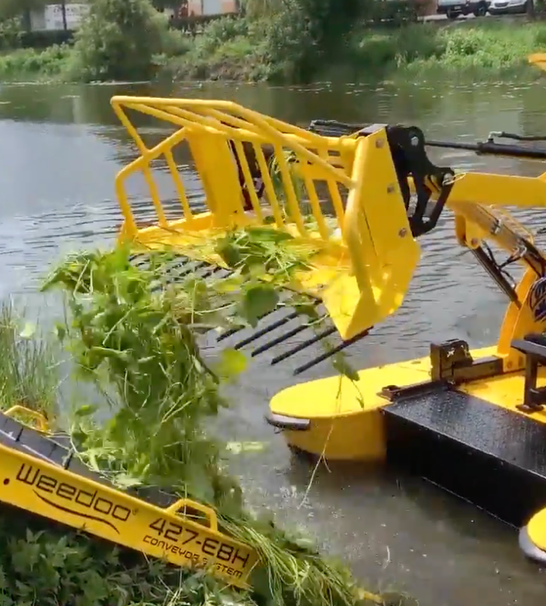
Many communities put harvested vegetation to practical use
Aquatic weeds can quickly overwhelm canals, lakes, and shorelines. Dense growth can block navigation, slow water flow, and contribute to declining water quality. That’s why many municipalities and water managers rely on mechanical harvesting to remove excess vegetation and restore healthy waterways.
But once those weeds are removed, they don’t have to become waste.
Aquatic plants absorb nutrients like nitrogen and phosphorus from the water as they grow. When dense vegetation dies and decomposes in place, those nutrients are released back into the water and can contribute to future weed or algae growth. By removing the plants entirely, mechanical harvesting helps break that cycle and improve water conditions.
In many communities, the harvested vegetation is put to practical use. Aquatic plants can be composted, used as mulch, or incorporated into soil as organic material. These uses help return nutrients to land rather than leaving them in the water, where they can continue to fuel excessive plant growth.
Mechanical harvesting also allows this material to be collected and conveyed efficiently to shore, making it easier for maintenance crews to remove large volumes of vegetation and transport it for reuse or disposal.
Aquatic weeds may start as a nuisance in the water—but once removed, they can become a useful resource on land.