Mechanical vs. Chemical: The 2025 Trend in Waterway Management.
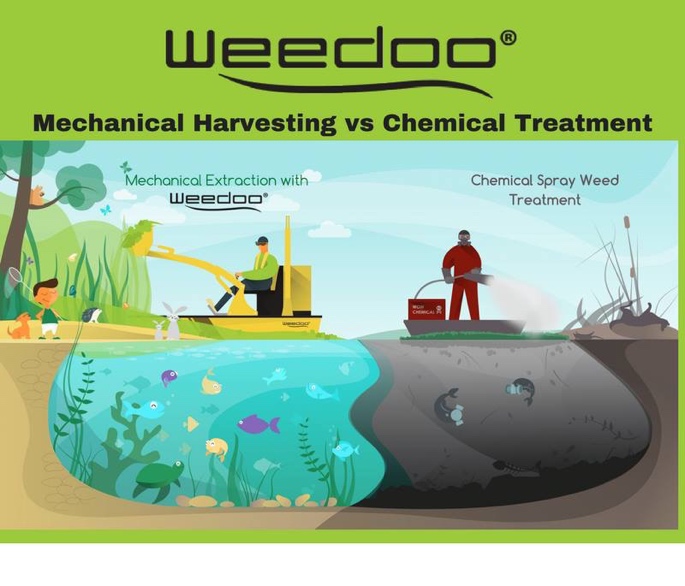
Across the country, water managers are rethinking how they handle invasive weeds, algae, and debris. Mechanical removal is becoming a preferred option over chemical treatments. Herbicides may provide quick visual results, but they only affect what’s above the surface. The roots remain, regrowth is rapid, and the decaying vegetation often fuels new algae blooms — creating a cycle of repeated treatments, ongoing disruption, and no lasting improvement.
Mechanical removal takes a different approach by physically extracting the problem. Instead of killing vegetation and leaving it to break down, mechanical tools remove weeds, roots, and debris completely — preventing nutrient buildup and protecting water quality. The result is cleaner water with no waiting periods and no chemical risk.
Why Chemical Treatments Fall Short
Treat the tops of plants but leave root systems behind
Cause rapid regrowth and repeated application cycles
Leave behind decaying vegetation that feeds algae
Often require water-use restrictions afterward
Why Mechanical Removal Is Gaining Ground
Removes vegetation entirely — roots, mats, and debris
Keeps oxygen levels stable and aquatic life safer
Works immediately with no chemicals or waiting periods
Produces cleaner, longer-lasting results
As more communities question how their waterways are being maintained, the demand for eco-friendly solutions continues to grow. Compact mechanical equipment is increasingly important — particularly in tight, shallow, or hard-to-reach areas where large harvesters can’t operate.
Weedoo is built for exactly this need. Compact, powerful, and engineered for precision, Weedoo workboats deliver pure muscle, zero chemicals, and real restoration — making mechanical removal the clear choice for 2025 and beyond.